Hey everyone, let’s cut to the chase—if you’re running a warehouse, distribution center, or even a parcel hub, you know that moving stuff is half the battle. The other half? Getting the right thing to the right place, fast, without losing a single box or making your team pull their hair out over mislabels. That’s where a sorter in a material handling system earns its keep. I’m on the MHE (material handling equipment) side of things, so I’ve walked through dozens of facilities where old, clunky systems bottlenecked operations, and modern sorters fixed that overnight. Let’s break this down like I would with a regular customer at my shop—no fancy jargon, just real, how-it-works details that actually matter. Material Handling Equipment
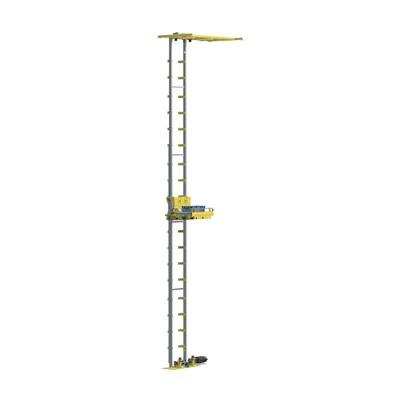
First, let’s set the scene: think of a sorter as the “traffic director” of your entire warehouse. It’s not just a machine that picks up boxes and drops them somewhere. It’s a synchronized network that reads every piece of inventory, decides where it needs to go, and gets it there without missing a beat. I’ve seen small e-commerce hubs get by with 100 sorts an hour, and big parcel giants do 20,000+ an hour with the same core tech. The base process works the same, regardless of scale.
Let’s start with the input side—because a sorter is useless if you just dump boxes on it randomly. Before anything touches the sorter’s main bed, that box needs to have a unique identifier, right? Most of the time, that’s a barcode (1D or 2D, like QR codes) or even an RFID tag these days. Scanners positioned right at the start of the sorter’s infeed line snap that code in half a second, pull the data from your WMS (warehouse management system)—think of that as your warehouse’s brain—and figure out exactly which destination that box needs to hit. No guesswork here; that step is non-negotiable. I always tell customers: if your infeed scanners are dirty or your WMS has a glitch, the sorter will mess up. It’s only as good as the info you feed it.
Once the box is tagged and its destination is locked in, it moves onto the sorter’s main conveyor bed. This isn’t your basic belt conveyor, by the way. Different sorters use different tech here, and that’s where you pick the right one for your operation. Let’s go through the common types I see in the field, because not every sorter works the same.
First up, cross-belt sorters—these are the workhorses for e-commerce and 3PLs (third-party logistics). The main bed has individual small belts attached perpendicular to the direction the box is moving. When a box needs to divert, the specific belt under it flips sideways at a 90-degree angle, pushing the box onto a side chute. I love these because they’re gentle—great for fragile stuff like glassware or electronics, and they handle irregular shapes (like a standing lamp or a box with a weird corner) way better than others. The downside? They’re a bit pricier upfront, and the belts need regular maintenance to keep them from slipping. I installed one for a apparel brand last year that now sorts 8,000 items an hour with 99.8% accuracy—way less returns from wrong deliveries.
Next, sliding shoe sorters—super common in big parcel centers, they’re the workhorses for high-volume, uniform boxes. The main conveyor is a flat surface, and when a box needs to divert, a smooth, plastic “shoe” pops up from under the conveyor, slides sideways at the same speed as the box, and shoves it into a chute. No flipping belts, no extra parts, so they’re cheaper to maintain and handle way more volume—up to 25,000 items an hour. The catch: they’re hard on boxes with soft sides, like a padded envelope, because the shoe can dent or tear it. I tell folks with mostly rigid boxes (like Amazon’s fulfillment centers) to go sliding shoe; if you do a mix, cross-belt is better.
Then there’s tilt-tray sorters—another fan favorite for mixed inventory, often used in airports too (fun fact, that’s the same tech that moves your checked bags to the right plane). Each tray is small, tilted a bit, and when the destination is called, the tray tilts sideways, dumping the box into the correct chute. They’re gentle, handle everything from small envelopes to big totes, and accuracy is almost perfect. The only con? They’re slower than sliding shoe—maxing out around 12,000 items an hour—so they’re great for mid-volume facilities that handle varied goods.
Now, the real magic happens when the sorter is actually diverting boxes. Let’s walk through that step by step, like a box going through the system: A women’s clothing brand we work with sends a size small sweater to a zip code in Chicago. The box gets scanned at infeed, the WMS says “Chicago chute 3B” is where this needs to go. As the box moves along the sorter, sensors every few feet track its position—like little GPS for packages—so the system doesn’t divert it too early or too late. A split second before the box reaches the chute 3B spot, the trigger goes off: if it’s a sliding shoe, the shoe pops up; if it’s cross-belt, the belt flips; if it’s tilt-tray, the tray tilts. The box is pushed smoothly off the main conveyor, into the chute, and down to the holding area for Chicago-bound shipments.
Wait, what about mistakes? No machine is perfect, but modern sorters have built-in checks. I’ve seen sorters with barcode readers right after the chute, making sure the box that just landed is the right one. If it’s not, it gets diverted to a “error chute” where your team can fix the label or WMS issue instead of letting it go to the wrong state. That’s a huge upgrade from old systems where you’d have to manually sort every 100 boxes to catch errors.
Another thing people don’t talk about: the sorter’s downstream side, when boxes are taken off the chutes and sent out. A good sorter syncs with your packaging and shipping lines, so once a box is in the right chute, it moves straight to loading docks without piling up. I worked with a 3PL a couple years back that was using a manual sorting team of 15 people, working 12-hour shifts, missing 200 shipments a day. We swapped in a tilt-tray sorter, cut their sorting team to 3 people, and error rate dropped to 10 a day—saved them over $100k a year in labor and returns.
Now, let’s address the elephant in the room: cost. I get it, sorters aren’t cheap. But the ROI is fast. For a small e-commerce shop with 1,000 shipments a day, a basic table-top sorter (think smaller, lower-speed) might make sense, instead of a full industrial model. For a 10,000-shipment-a-day operation, a sliding shoe sorter pays for itself in 18-24 months, tops, from saved labor and less wrong deliveries. I always tell customers not to just buy the cheapest sorter—buy the one that fits their current volume and future growth. If you’re planning to double your shipments in two years, get a sorter that can handle that, not one that maxes out at your current number.
Maintenance is another big part that people overlook. A sorter is a machine, so it needs regular checks. I tell my clients to do weekly spot checks on scanners and shoes/belts, and a full service every 6 months to lubricate parts and adjust sensors. Skip that, and you’ll start seeing more mis-sorts, downtime, and higher repair bills. Last year, a customer skipped service for a year, their sliding shoe sorter had a broken gear, and they were down for 3 days—cost them $50k in lost shipments. That’s way more than the cost of a quarterly service plan.
What about the future? I’m seeing sorters get smarter, with AI that can predict issues before they happen. Like, if a conveyor belt is starting to slip, the system will alert your team to fix it before it breaks. Some are even integrated with robotic arms now, so boxes don’t have to be placed on the infeed manually—robots pick them from totes and set them right on the sorter, cutting down on manual labor even more. It’s wild, but the core of how a sorter works hasn’t changed in 20 years: scan, decide, divert. The tech around it is just getting better.
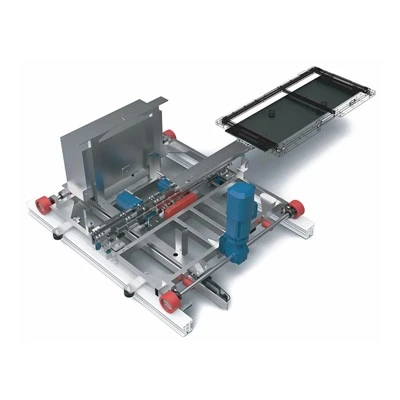
At the end of the day, the sorter is one of the most important pieces of equipment in a material handling system because it’s the difference between “we’ll get your order in 3 days” and “we messed up, it’ll be 2 weeks.” It’s not just a machine—it’s the backbone of fast, accurate order fulfillment. If you’re looking to upgrade your sorter, or just want to figure out if your current one is working as hard as it should, hit me up to chat through your specific operation. I don’t do one-size-fits-all quotes, I just listen to what you need and find the right solution for your warehouse, no fluff, no hidden fees.
Material Handling Equipment References
- Material Handling Industry of America (MHIA). "Conveyor Systems and Sorters: A Guide for Distribution Centers." 2022.
- Thomas, R. "Modern Sorter Technologies: Selecting the Right Solution for High-Volume Fulfillment." Journal of Warehouse Operations, 2021.
- Bosch Rexroth. "Material Handling Sorters: Design, Operation, and Maintenance Best Practices." 2023.
- Parcel and Postal Technology International. "High-Speed Sorters: Balancing Speed and Accuracy in E-Commerce." 2022.
Anhui Rayo Automation Technology Co., Ltd.
With abundant experience, we are one of the most professional material handling equipment manufacturers and suppliers in China. Please feel free to wholesale advanced material handling equipment in stock here and get quotation from our factory. All customized products are with high quality and competitive price.
Address: No.28 Yongzhen Road, Wuhu Area, China (Anhui) Pilot Free Trade Zone
E-mail: ahry@ahrayo.com
WebSite: https://www.rayosmart.com/
