Hey everyone, if you’ve ever dabbled in solar power—whether you’re off-grid in a tiny cabin, setting up a rooftop system for your home, or even putting together a portable setup for camping—you’ve probably heard of an MPPT solar charge controller. And if you’re new to all this, one question you might be low-key stressing over is: how much does an actual MPPT charge controller even weigh? As a guy who’s been in the game as an MPPT solar charge controller supplier for the last 8 years, I get it—this isn’t just a random number to plug into a spec sheet. Weight matters for logistics, installation, even whether it fits that tight spot on your RV’s dashboard. Let’s break this down like we’re shooting the breeze at a solar workshop, no stuffy jargon here. Mppt Solar Charge Controller
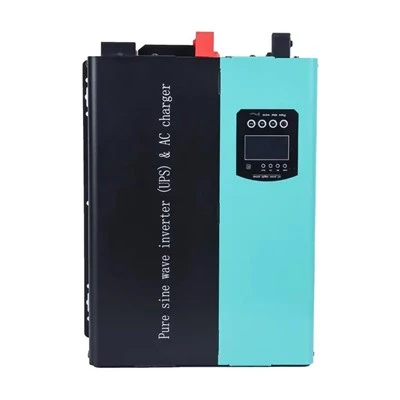
First off, let’s get one thing straight: there’s no one-size-fits-all answer. MPPT charge controllers are built for totally different jobs—you wouldn’t expect the same weight from a tiny 10A unit for a backpacking solar panel as a 100A unit powering a whole off-grid farm, right? Let’s start with the basics: what makes an MPPT charge controller heavy in the first place? It’s not just plastic casing (that’s light as a feather). The real weight comes from the guts inside: the main circuit board with all the tiny chips, the heat sinks that keep it from overheating (super important for handling big power), capacitors that store energy, and the metal terminals you connect all your wires to. Throw in bigger power components, thicker wiring, and heavier-duty enclosures for outdoor use, and you’ve got a range that spans from less than a pound to 15 pounds or more.
Let’s walk through the most common types you’ll come across, because that’s where the real weight lives. First up: tiny, low-power units—think 10A to 30A. These are the ones you’ll find on small portable panels, basic RV auxiliary battery setups, or even 12V systems for ATVs or golf carts. A 10A MPPT controller here is basically a little box, often less than 5 inches long. Weight? We’re talking like 0.3 to 0.6 pounds—yeah, that’s lighter than a can of soda. A 30A unit for a basic RV or small cabin might be a bit beefier, still under 2 pounds. I remember a customer last year who was picking up 20 of these for a tiny home build and joked he could fit all of them in his jacket pocket. Fair enough—they’re made for small, low-power jobs, so they don’t need heavy components.
Next, mid-range MPPT controllers. These are the workhorses: 40A to 80A, used for full-time RV setups, small cabin or shed systems, or even light commercial setups like a tiny retail stall with solar lighting and a mini fridge. This is where weight starts to jump a bit, because these units have to handle more power, which means bigger heat sinks to dissipate heat when they’re charging batteries fast. A 40A mid-range MPPT will usually clock in between 2 and 5 pounds. The 80A ones? Closer to 5 to 8 pounds. I’ve got a stock 60A unit in my warehouse right now—just picked it up to weigh it for this post—and it’s about 6.2 pounds. That makes sense: the heat sink alone on that bad boy is a chunk of aluminum about the size of a smartphone, which adds a few ounces, plus the heavier terminals for 8-gauge wires instead of thin 14-gauge for the small units.
Now, the heavy hitters. These are the high-power MPPT controllers, 100A to 150A and above, made for big off-grid homes, farm systems, or even grid-tie with battery backup. This is where weight gets real—we’re not talking pocket-sized or even backpack-sized anymore. A 100A unit here will be between 8 and 12 pounds. The 150A ones? That’s 12 to 15 pounds, and some even bigger for 200A models—those can hit 18 pounds, easy. Why so heavy? Let’s think: a 150A controller has to handle 150 amps of current, which generates a ton of heat. So the heat sink isn’t just a little aluminum chunk—it’s a big, finned aluminum block that takes up half the unit’s casing. The circuit board is bigger, the capacitors are way larger (since they have to store way more energy to handle big charge cycles), and the terminals are heavy-duty copper lugs instead of the small screw terminals on low-power units. I had a farmer order two 120A units last month for his chicken coop and irrigation system—when he picked them up, he joked he could “use these as weights if he needed to work out.” Fair, but he ended up needing them, not the weights.
Wait a second—before you go thinking “the higher the amp rating, the heavier it is 100% of the time,” let’s talk about exceptions, because there are a few. The first big one is whether the controller is a ‘conventional’ design or uses newer, more compact tech. A lot of newer MPPTs use what’s called ‘silicon carbide’ semiconductors, which are way more efficient at handling power without generating as much heat. That means they don’t need as big of a heat sink, so they can be lighter even with the same amp rating. For example, a 60A conventional MPPT is around 6 pounds, but a newer silicon carbide version of the same amp might be 4.5 pounds. That’s a big difference if you’re installing it on a rooftop where every pound matters for structural load, or if you’re packing it in for a mobile setup. I always tell my customers: if weight is a top priority, ask for our silicon carbide models—they’re a bit pricier, but worth it if you’re hauling the unit around or putting it in a spot that can’t handle extra pounds.
Another exception: whether it’s a ‘waterproof’ or ‘indoor-only’ unit. Waterproof MPPTs (like the ones we make for RV exteriors, off-grid cabin porches, or farm barns) have to have a sealed, rugged casing—usually thick ABS plastic or even aluminum—to keep water and dust out. That extra casing adds a bit of weight, like 0.5 to 2 pounds depending on the size. Indoor-only units have a thin plastic shell, so they’re lighter, but they’re not built to handle rain or dust. I had a customer once who bought an indoor unit for his outdoor RV mount because he didn’t check the spec—he ended up having to order a waterproof replacement, which was 1.5 pounds heavier, but he was glad he did when it survived a week of heavy rain.
Now, why does weight even matter, beyond just knowing a number? Let’s get into the real-world stuff you’ll actually care about. First, installation. If you’re putting an MPPT on an RV roof, structural load is a real thing. Most RV roofs have a weight limit (usually around 2 to 5 pounds per square foot for static loads, plus extra for dynamic loads from wind). A 15-pound high-power controller isn’t a big deal for a big RV roof, but if you’ve got a tiny pop-up camper, that extra weight might make a difference. Same with rooftops on small homes—if you’re adding solar panels and a controller, you don’t want to overload the roof’s structural rating. We always send our customers a weight spec sheet with every order, so they can check that before installation—saved a few people from headaches last year when they realized their roof could only handle 8 pounds total for controllers.
Then there’s shipping and logistics. If you’re ordering a bunch of controllers for a project, total weight matters for shipping costs. A pallet of 100 60A controllers is way cheaper to ship than a pallet of 100 150A units, so that’s a big factor for contractors or big project managers. I have a few regular contractor clients who stick to mid-range 60A units because the shipping cost for 50 units is half what it would be for 50 120A units, and that works for their small to mid-sized commercial jobs.
And let’s not forget portability. If you’re a van lifer who moves your solar setup every few weeks, or a camper who takes it on weekend trips, a lighter controller is way easier to haul around. I’ve had van lifers tell me they swap their controllers out when they go on long trips with less power needs—they’ll bring the tiny 20A 1-pound unit for weekend camping, and the 60A 6-pound one for full-time van life. Makes total sense—why carry extra weight if you don’t need it?
Wait, let’s also clear up a common myth I hear all the time: a lot of people think “heavier controller = better, more powerful.” That’s not always true. Yeah, high-power controllers are heavy, but not all heavy controllers are powerful. Some cheap, low-quality MPPTs use thick, heavy heat sinks (they’re cut corners on actual power components and just make the heat sink big to look like it’s powerful) but they have lower amp ratings. Those are the units you want to avoid—they might feel heavy, but they’ll underperform and overheat way faster. At my company, we test every controller before shipping to make sure weight is paired with actual power output, not just cheap extra metal.
Another thing: if you’re integrating multiple controllers into a system (like two 60A controllers for a 120A system, instead of one big 120A unit), total weight might even be similar, but it’s easier to install. Two 6-pound units are 12 pounds total, same as one big 12-pound 120A unit, but the smaller units are easier to mount in tight spots, and if one breaks, you only have to replace one instead of the whole system. That’s a big plus for off-grid people, because downtime sucks.
Let’s recap to make this easy:
- Low-power (10A-30A): 0.3lb – 2lb (great for small portable setups, ATVs, tiny auxiliary batteries)
- Mid-power (40A-80A): 2lb – 8lb (workhorses for RVs, small cabins, light commercial)
- High-power (100A+): 8lb – 18lb+ (for big off-grid homes, farms, commercial systems)
- Newer models with compact tech: 10-20% lighter than conventional units for the same amp rating
- Waterproof models: 0.5lb – 2lb heavier than indoor models of the same size
Now, if you’re still stuck on what weight you need, here’s my quick tip as a supplier who’s helped hundreds of people pick the right controller: start with your system’s total solar panel wattage and battery bank voltage. A general rule is MPPT controller amp rating is roughly (solar wattage / battery voltage) x 1.25 (to account for peak power). Once you have that number, go back to the weight ranges above. If portability or roof load is a concern, lean toward the newer compact tech models. If it’s for a fixed, big system, the heavier high-power units are totally fine—they’re built to handle the work.
At the end of the day, the weight of an MPPT solar charge controller isn’t some random spec number—it’s tied to what you’re using it for. Whether you’re a weekend camper, a full-time van lifer, a homeowner going off-grid, or a farmer powering your land, knowing that weight helps you pick the right unit that fits your needs, not just the biggest or cheapest one.
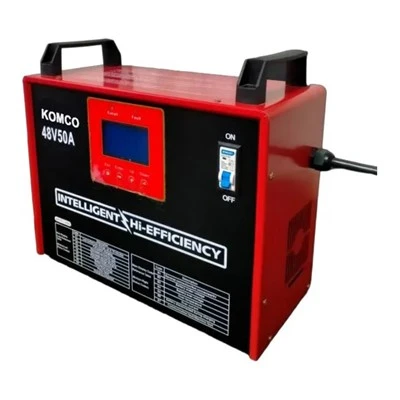
If you’re browsing for an MPPT controller and want to chat through weight specs, amp ratings, whatever, we’re here to help. We’ve got all the models I mentioned, from tiny portable ones to big high-power units, and we can walk you through what’s right for your setup, no pressure. Just reach out to talk through your needs.
Lithium Battery Charger References:
- "MPPT Charge Controller Weight Guide," Solar Power World, 2023.
- "Silicon Carbide Semiconductors in Solar Controllers: Performance and Weight Savings," Renewable Energy Focus, vol. 24, no. 3, 2022, pp. 112-118.
- "Structural Load Considerations for Rooftop Solar Systems," International Association of Certified Home Inspectors, 2021.
- "Portable Solar System Component Weights for Recreational and Off-Grid Use," Van Life Tech Journal, 2022.
Huizhou Qiangfeng Power Technology Co., Ltd.
As one of the most professional mppt solar charge controller manufacturers and suppliers in China, our products have good reputation in the market. We warmly welcome you to buy customized mppt solar charge controller made in China here from our factory. If you have any enquiry about quotation, please feel free to email us.
Address: No.28, Hu’ao Avenue, Shiwan Town, Boluo County, Huizhou City, Guangdong Province
E-mail: Komco@Jinlidianqi.cn
WebSite: https://www.qfautobatterychargers.com/
