Hey there, let’s cut to the chase: If you’re a C&I (commercial and industrial) operator, you’ve probably stared at your energy bill one month and thought, “Wait—we’re throwing thousands away because the sun’s shining but we don’t need power, or the wind’s blowing and our factory’s idling?” Or maybe you’ve dealt with that brutal grid outage that shut down your assembly line for 12 hours last quarter, costing you way more than you want to admit. That’s exactly why our whole team started working on C&I energy storage a few years back—and the number one question we get asked, hands down, is this: Can this stuff even play nice with renewables? Spoiler: It’s not just “can”—it’s the entire future of making renewables actually work for you, not just a marketing buzzword. C&I Energy Storage
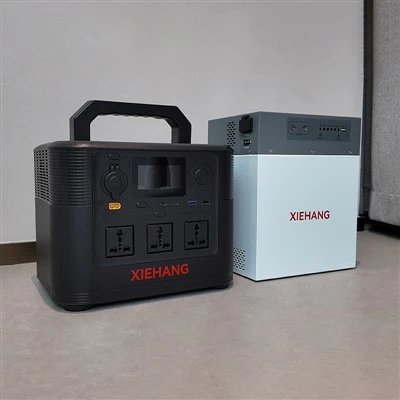
Let’s back this up with real-world stuff, not lab jargon. First, let’s clarify what C&I energy storage even is, for anyone new here. This isn’t the big utility-scale batteries you see on the news for grid-level projects—this is the mid-sized, scalable battery systems we build for factories, retail chains, warehouses, office parks, and all that. We install them right on your site, hooked straight into your operations, not just sitting miles away. And renewables here? Solar rooftops, ground-mount solar arrays on your property, small wind turbines for your industrial yard, whatever you’ve got (or want to add) to cut grid reliance.
So why was there ever even a question if these two can integrate? The main pain point with renewables, for C&I folks anyway, is their intermittency. The sun doesn’t shine at 2 a.m. when your 24/7 food processing line is humming, and the wind doesn’t blow when you need to power your Christmas light assembly factory in December (fun fact—we had a holiday light company client last year that complained exactly about that). Before good C&I storage, you were stuck: either sell that excess midday solar back to the grid for a measly wholesale rate, or keep buying expensive grid power when renewables aren’t pumping. It was a lose-lose.
But when you tie them together? That’s where the magic happens, and we’ve seen this first-hand with our clients. Let’s take a mid-sized e-commerce warehouse client—150,000 sq ft, 3 DC power levels, rooftop solar that puts out 200 kW peak. Before our storage system, they were buying grid power at $0.18/kWh during peak hours (that’s 10 a.m. to 8 p.m. local time) and selling excess solar at $0.05/kWh midday. After we installed a 500 kWh lithium-ion storage system hooked straight to their solar array? Here’s what shifted: Midday, when their order pickers run and the solar is cranking, they charge the batteries full, not sell a single extra kWh back. Then, from 5 p.m. to 7 a.m., they run the entire pick and pack operation on stored power instead of the grid. Their grid bill dropped 42% in the first quarter, and they didn’t see a single power dip that messed up their order sync with Amazon for 8 months straight. That’s not theory—that’s real, monthly savings for a real C&I business.
Wait, but there’s more than just shifting load. What about when the grid has those “stress events”? You know, those hot summer days where everyone’s cranking AC, and the utility tells you you can’t pull more than 100 kW off the grid to avoid blackouts. Before storage, our manufacturing client would have to shut down their stamping line, which costs $15,000 an hour. Now, their storage system and solar kick in to cover that extra load during stress events, no shutdown, no penalty. We’ve had clients who avoided $100k+ in outage-related costs in one summer month alone because of this integration.
Now, let’s talk about the counterarguments, because we don’t do fluff here. Some people will say “batteries are too expensive” or “renovables are unreliable, so pairing them makes both worse.” That’s a fair take—5 years ago, that was true. But here’s the thing: Battery costs have dropped 80% in the last decade, per all the energy research groups, and C&I storage systems are built specifically for this use case, not for grid-scale. We size our systems based on your actual load, not a one-size-fits-all number. For example, a small restaurant chain with 10 locations doesn’t need a 1 MWh battery—they need 50 kWh per site to cover their refrigeration and POS systems during outages and peak hours. We design that, no overkill.
Another pushback we hear: “My renewables are already installed, so can I add storage later?” Absolutely. That’s a common misconception—you don’t have to rip out your solar to add C&I storage. Our systems are modular, so we can retrofit them to existing solar or wind setups in a day or two, with minimal downtime. We did that for a industrial farm client last year—they had a 1 MW ground-mount solar array installed in 2021 that was just selling excess to the grid for pennies. We added a 2 MWh storage system, and now they power their irrigation, grain drying, and on-site office 100% from their own renewables 12 hours a day. Their energy costs went from $12,000 a month to $1,800. That’s not a typo—we checked their utility bills.
Wait, but what about the technical side? Do these systems actually talk to each other, or do you have to have a crew on-site messing with wires all the time? Nope, modern C&I storage is smart. Our systems integrate with your building management system (BMS) and your solar inverter automatically. They use real-time data—what’s the sun’s output right now? What’s your next week’s load forecast (we can pull that from your order management system, if you let us)? When is the grid’s peak pricing window? Then it adjusts charging and discharging on its own, no manual input. Last month, a client had a sudden cold snap that made their factory’s heating load jump 30% overnight. The storage system detected that the next day’s solar was going to be extra strong, so it charged a little extra the night before, and covered the heating load without tapping the grid at all. That’s the kind of synergy you can’t get if you’re just using renewables alone.
Let’s also talk about regulatory stuff, because that’s a huge pain point for C&I operators. In most areas, utilities now offer net metering programs, but those are shifting—many are capping how much excess you can sell back, or lowering the rate. Integrating storage lets you dodge that, because you’re not selling excess at a loss—you’re using it yourself. Some regions even offer tax incentives for C&I storage paired with renewables; we’ve had clients get 30% of their system cost back in federal tax credits, plus state-level rebates, which cuts the payback period from 7 years to under 3. That’s a no-brainer for any business looking to cut long-term costs.
But hold on—this isn’t a one-size-fits-all solution. We don’t just sell a battery and walk away. Our team does a full energy audit first: we look at your monthly load, when you use power, what renewables you already have, what your utility’s rates are. Then we size and configure the system specifically for your business. A data center client needs a different setup than a bakery, which is different from a hotel. For example, a hotel’s peak load is at night when guests are using AC and lights, so we size their storage to charge during the day when solar is high, then power the hotel after the sun goes down. That’s why the integration works—it’s tailored to your energy use, not a generic setup.
I know, I know—you’ve probably heard a hundred “game-changing” tech solutions that never deliver. So let’s talk about the long-term stuff, not just short-term savings. Pairing C&I storage with renewables also reduces your carbon footprint, which is huge for a lot of our clients—retail chains with sustainability goals, manufacturers that need to report Scope 2 emissions, even small businesses that want to market themselves as eco-friendly. One of our clients, a mid-sized apparel brand, used to have Scope 2 emissions that were holding them back from major retail partnerships. After integrating their solar and storage, they cut those emissions by 85%, and landed two new national accounts because of it. That’s an added benefit you don’t get from just renewables alone.
Now, let’s address the big “what ifs.” What if my battery breaks? Our systems come with 24/7 monitoring, and we have a team on call 24/7 to fix any issues. We’ve never had a client go more than 4 hours without service if there’s a problem. What about fire risk? All our systems are built with commercial-grade safety features, and we follow strict industry standards—we’ve never had a safety issue in our 6 years of operating. What if I want to expand my business later? Our storage systems are modular, so we can add more battery units as your load grows, no need to replace the whole system.
So circling back to the original question: Can C&I energy storage be integrated with renewable energy sources? The answer is not just yes—it’s that this integration is the most practical, cost-effective, and reliable way for C&I businesses to take control of their energy costs, avoid outages, and hit their sustainability goals. We’ve worked with 120+ C&I clients across North America, and every single one that installed a storage system with their renewables saw measurable savings within the first quarter.
If you’re a C&I operator who’s tired of overpaying for grid power, dealing with outages, or watching excess renewables go to waste, we’re here to help. We don’t do one-size-fits-all pitches—we sit down with your team, go over your energy use, your goals, and build a custom system that fits your needs and your budget. Stop throwing money at the grid and start making your energy work for you. Reach out to our team to talk through your specific situation, no sales pitch, no pressure—just honest answers about how C&I storage and renewables can work for your business.
Solar Energy Storage System REFERENCES
International Energy Agency. (2023). Global Lithium-Ion Battery Cost Trends.
U.S. Energy Information Administration. (2024). Commercial and Industrial Energy Storage Market Update.
National Renewable Energy Laboratory. (2023). C&I Renewable Energy and Storage Integration Case Studies.
Zhejiang Xiehang New Energy Equipment Co., Ltd.
As one of the most professional c&i energy storage manufacturers and suppliers in China, our products have good reputation in the market. Please erst assured to wholesale custom made c&i energy storage from our factory. If you have any enquiry about cooperation, please feel free to email us.
Address: No.5 Hechen Road, Zhouwangmiao Town, Haining, Jiaxing City, Zhejiang Province, China
E-mail: dan.wu@xiehang.net
WebSite: https://www.shineonpower.com/
