If you’re in the market for injection molded parts, you’ve probably wondered how suppliers make sure every single piece is right. As a injection molded products supplier who’s spent 8 years on the factory floor (and answered way too many texts from our team when a batch didn’t check out), I’m here to break down the inspection methods we actually use—no stuffy jargon, just what works for real parts. Injection Molded Products

First off, let’s set the scene: injection molding is fast. We can crank out 1,000 plastic parts an hour on a mid-sized machine, so inspections can’t drag. We split them into two main buckets: in-process checks (while the machine is running, so we catch mistakes early) and final inspection (before parts leave our warehouse). Both matter, and skipping either is how you end up with a batch that doesn’t fit your product.
Let’s start with in-process inspections, because that’s where we avoid wasting materials and time. The first one we do is visual inspection—but not just glancing. Our quality team uses bright LED lights (no dim garage bulbs here) and checks for the big stuff first: flash, short shots, sink marks, and weld lines. Flash is that extra thin plastic edge around parts, like a cheap Lego set with extra plastic bits. Short shots is when the mold didn’t fill all the way—say, a phone case missing the camera bump. Sink marks are those dents on thick walls, like a water bottle’s base that’s sunken in (bad for holding liquid, obviously). Weld lines are where two streams of melted plastic meet in the mold; if they’re too weak, the part can snap.
Wait, we also do a quick dimensional check right after the part pops out. A lot of suppliers use calipers for this, but we grab a lot of go/no-go gauges—they’re cheap little tools that fit over a pin or slide into a hole, so our operators can check 10 parts in 2 minutes instead of fumbling with a digital caliper. If the part doesn’t fit the gauge, we stop the machine, adjust the melt temperature or mold pressure, and fix it before 500 bad parts get made. I’ve seen guys ignore that “stop” signal once, and we ended up with 2,000 parts we had to grind up—total waste, and that’s a cost we pass on to customers if we mess up.
Then there’s final inspection, which is what everyone cares about when parts arrive at your shop. Let’s get into the specific methods here, because these are the ones that make sure your parts work, not just look right.
First up is coordinate measuring machine (CMM) inspection. This is the fancy machine we pull out for high-precision parts—like medical device components or automotive parts that have to fit in a tight space. A CMM has a probe that touches hundreds of points on a part, and it spits out a report that says exactly how close every dimension is to your blueprint. We don’t do this for every batch (it’s slow, like 2 parts an hour), but if you’re ordering 10,000 aerospace clips, this is the method we use to make sure none of them are off by even a hair—because even 0.1mm can mean a clip that doesn’t hold a turbine blade.
Next is material testing, because not all plastic is created equal. If you’re making a part that has to hold up to heat—like a coffee machine spout—we test its melt flow rate (MFR) and tensile strength. MFR checks how easily plastic melts; if it’s too high, the part might warp in the microwave. Tensile strength is how much force the part can take before breaking. We also do environmental testing sometimes: leave parts in a hot warehouse for a week, or in cold storage, to make sure they don’t crack when you ship them in the winter. For food-grade parts? We run compliance tests to make sure no plastic leaches into whatever’s going inside your product—super important for things like kid’s sippy cups or food storage containers.
Wait, there’s also leak testing, which we use a lot for parts like fuel system components or water pump housings. There’s two ways we do this: pressure decay and vacuum testing. Pressure decay is simple: we pump air into a sealed part, wait a minute, and check if the pressure drops. If it does, there’s a hole or a crack. Vacuum testing is the opposite: we suck air out of a sealed part, and if it stays sealed, no leaks. We had a customer a few years ago make small garden sprinklers and skip leak testing—half the batch leaked in the first rain, and we had to redo the whole order. Now we never skip this.
Then there’s surface finish inspection. Some parts need to be smooth (like a toy’s face that touches a kid’s hand) and some need texture (like a car’s interior trim that doesn’t get fingerprints). We use a profilometer to measure surface roughness—it gives a number that tells us if the texture is exactly what you asked for. For parts that need no surface flaws—like a medical implant—we might do a magnified visual check with a microscope, looking for tiny burrs or scratches that you can’t see with the naked eye.
Wait, let’s not forget about statistical process control (SPC) data. This isn’t a “test” exactly, but it’s how we track our inspections over time. Every hour, we log the dimensions of 5 parts, put that into a graph, and if we see a pattern—like dimensions creeping a little too big over 10 hours—we adjust the machine before parts go out of spec. It’s like checking your blood pressure every day instead of waiting for a heart attack. Our old guy who’s been molding for 20 years swears by this, and it’s cut our defect rate by 70% in the last 5 years.
Now, let’s talk about common mistakes suppliers make here, because that’s what sets us apart. A lot of small shops skip in-process checks because they want to run the machine 24/7. But if you skip early checks, you end up with a final inspection that’s just throwing parts away—wasteful and expensive. Others rely only on visual checks, which misses tiny dimensional errors that only show up when you’re assembling your product. We once had a customer come to us from a shop that only did visual checks on plastic gears—half the gears were 0.2mm too small, so they didn’t fit their assembly line. We fixed that by adding go/no-go gauge checks for every gear, and their defects dropped to zero.
Another thing: communication. We always ask customers what’s “critical” for their parts. If you say, “the hole has to fit a specific screw, no exceptions,” we’ll do a 100% check on that hole, not just sample it. If you say, “surface finish is just a bonus,” we’ll relax that part a little. No one knows your product better than you, so we adjust our inspection plan to fit your needs, not a one-size-fits-all rule.
So, when you’re vetting an injection molded parts supplier, ask them what inspection methods they use. If they say “we just look at them,” run the other way. If they can walk you through in-process checks, CMM for precision parts, and leak testing where needed, that’s someone who cares about their work—and yours.
At the end of the day, inspection isn’t just about catching bad parts. It’s about making sure your product hits the market on time, on budget, and works like it’s supposed to. We’re not perfect—we’ve had batches that needed rework, we’ve missed a tiny flaw once—but we’ve built our business on being transparent about our inspections, and fixing things before they become a big problem.
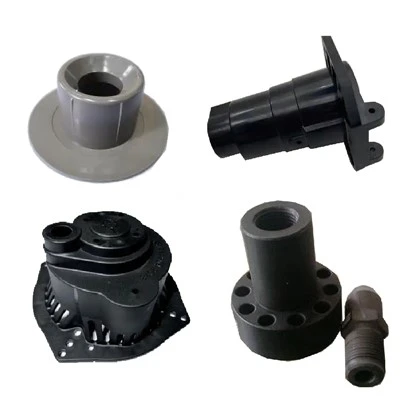
If you’re gearing up for your next injection molded project and want to make sure the parts are checked right, hit us up to chat. We’ll walk you through our inspection process, answer any questions, and work with you to make sure you get exactly what you need. We’re not the biggest supplier around, but we’re the ones who pay attention to the details that matter for your product.
Injection Molded Products References
- Rosato, D. V., & Rosato, M. G. (2012). Injection Molding Handbook (5th ed.). Hanser Publications.
- American Society for Quality (ASQ). (2021). Inspection Processes for Manufacturing. ASQ Quality Press.
- Tooling & Molding Association (TMA). (2020). In-Process Quality Control for Injection Molding. TMA Technical Report.
- ASTM International. (2019). Standard Test Methods for Tensile Properties of Plastics (D638). ASTM International.
- International Organization for Standardization (ISO). (2018). Medical Devices – Quality Management Systems – Requirements for Regulatory Purposes (ISO 13485). ISO.
Wuxi Metik Precision Machinery Co., Ltd.
With over 25 years’ experience, we are one of the most reliable injection molded products manufacturers and suppliers in China. We warmly welcome you to buy customized injection molded products made in China here from our factory. If you have any enquiry about cooperation, please feel free to email us.
Address: Tsinghua Innovation Building, Huishan Economic Development Zone, Wuxi
E-mail: info@metik-metal.com
WebSite: https://www.metikmetal.com/
