If you walk into any busy office, a bustling retail mall, or a full-service restaurant, you don’t just go there for products or services — you go to breathe. For commercial spaces, air quality isn’t a nice-to-have; it’s a core part of keeping employees productive, customers comfortable, and spaces compliant with public health rules. As someone who’s spent the last decade working directly with commercial clients, I’ve seen firsthand how one-size-fits-all residential air purifiers fall flat for these environments. Today, I want to break down the key features that set commercial air treatment equipment apart, and why getting these right isn’t just a purchase — it’s an investment. Air Treatment Equipment

First, let’s start with scale, because commercial spaces aren’t like your 1,500-square-foot home. A 10,000-square-foot warehouse has far different air volume needs than a 50-seat coffee shop, and a 100,000-square-foot hospital’s ventilation system is even more complex. The biggest difference here is airflow rate, measured in Cubic Feet per Minute (CFM). Residential units might top out at 500 CFM, but commercial models we supply range from 500 CFM for small retail boutiques to 50,000 CFM for large-scale manufacturing facilities. But it’s not just about blowing air — it’s about capturing pollutants before they circulate. For example, a dentist’s office generates aerosols from dental procedures; a grocery store has volatile organic compounds (VOCs) from cleaning supplies and fresh produce; a call center has dust, skin cells, and odors from hundreds of employees working 9-to-5. Commercial equipment must be sized to process every cubic foot of air multiple times per hour, a measure called Air Changes per Hour (ACH). Most commercial spaces require 4 to 12 ACH, depending on use case, and our systems are calibrated to hit those numbers without creating drafts that make customers or staff uncomfortable.
Next, filter performance and adaptability to specific contaminants. Home air purifiers often focus on particulate matter like dust and pollen, but commercial spaces face a wider, more toxic range of pollutants. That’s why commercial air treatment equipment uses industry-standard MERV (Minimum Efficiency Reporting Value) ratings, but not just any MERV. For reference, MERV 11 to 13 works for dust and pollen in offices, but spaces handling hazardous materials or pathogens need MERV 14 to 16 — and even HEPA (High-Efficiency Particulate Air) filters for healthcare facilities or clean rooms. However, a filter’s efficiency only matters if it fits the equipment properly. Poorly sealed filters allow unfiltered air to slip through gaps, which is a common mistake with cheap commercial units. We build our systems with gasket-sealed filter housings and leak-test every unit before delivery, ensuring at least 99.97% efficiency for HEPA models, and 90%+ for medium-efficiency filters. Beyond particulates, many commercial spaces need to target gaseous pollutants like VOCs, mold spores, or even carbon dioxide (CO2) from overcrowding. That’s why our line includes optional activated carbon and catalytic filter layers — a feature most residential units don’t offer — that neutralize odors and chemicals without releasing harmful byproducts. For example, a restaurant kitchen can trap grease and cooking odors with a specialized grease filter, while a tech lab uses HEPA and carbon filters to capture chemical fumes from soldering.
Then, smart connectivity and compliance tracking, which are non-negotiable for commercial use. Business owners don’t have time to check air quality every day, and they also face regulatory requirements from local health departments, OSHA, and EPA. That’s why modern commercial air treatment equipment includes IoT (Internet of Things) integration, which lets you monitor air quality metrics remotely, schedule filter changes, and adjust settings from a phone or computer. For example, if a warehouse’s CO2 levels spike during a busy shift, the system can automatically increase airflow without manual input. We also build our systems with built-in compliance reporting tools, which generate digital logs of filter performance and air quality levels that you can share with inspectors if needed. A common pain point we hear from small business owners is that they have to shut down operations to inspect filters or clean ducts — our equipment has access panels that let technicians perform maintenance in under 10 minutes, with built-in sensors that alert you when it’s time to change filters, eliminating guesswork. Unlike residential units that run 24/7 on a fixed setting, our commercial systems also offer variable speed controls, so you can lower airflow during off-hours (like a retail store closing at night) to save on energy costs, then ramp it up during peak times when foot traffic is high. That flexibility translates to lower utility bills, which is a big win for any business’s bottom line.
Durability and uptime are another key feature. A residential air purifier might last 5 to 7 years, but commercial systems run 24 hours a day, 7 days a week in many cases — think a hospital’s emergency room, a 24-hour gas station convenience store, or a data center where air quality prevents overheating. That means they need to handle more wear and tear, with stronger motors, corrosion-resistant casings (for spaces with high humidity, like swim facilities or laundromats), and built-in overload protection. We test every model in our facility by running it at full capacity for 30 days straight to catch any issues before it reaches a client’s space. We also offer extended maintenance plans for all our commercial equipment, which is a service most residential suppliers don’t provide. For example, a hotel with 10 floors might have 12 air treatment units; our team can schedule quarterly inspections, clean coils, and replace filters on a planned basis, so you never have a unit break down unexpectedly. Uptime isn’t just convenient — for a manufacturing facility, a downtime-related air quality event can shut down production for hours, costing thousands of dollars in lost revenue. That’s why durability and support are just as important as the technical specs of the equipment.
Noise control is another feature that’s often overlooked but critical for commercial spaces. A noisy air purifier can disrupt a call center’s focus, make a café’s seating area uncomfortable, or distract students in a school classroom. Most commercial equipment used to be loud — often 60 to 70 decibels, which is as loud as a normal conversation at a restaurant — but modern designs balance airflow needs with sound dampening. Our line uses insulated housing, variable speed fans, and acoustic foam lining to keep noise levels between 45 and 55 decibels, depending on the model. For context, that’s quieter than a typical office printer, which means you won’t notice the unit running when you’re working, eating, or shopping. We also offer low-noise “silent mode” options for spaces like libraries or co-working spaces where quiet is a priority, so you can customize the equipment to fit your space’s intended use.
Let’s put this all in context with a real example: last year, we worked with a 3,000-square-foot pediatric clinic that was struggling with frequent cold and flu outbreaks among staff and young patients. Their old residential-style air purifiers only changed the air twice per hour, and they didn’t capture aerosols from the waiting area where families gathered. We installed a system sized for 10 ACH, with MERV 15 HEPA filters for pathogens, activated carbon layers to eliminate disinfectant odors from exam rooms, and IoT sensors that alert our team when it’s time for filter changes. Within three months, the clinic reported a 40% drop in patient respiratory-related complaints, and their staff sick days decreased by 25%. That’s the impact of choosing a commercial system that’s built for the space, not the home.
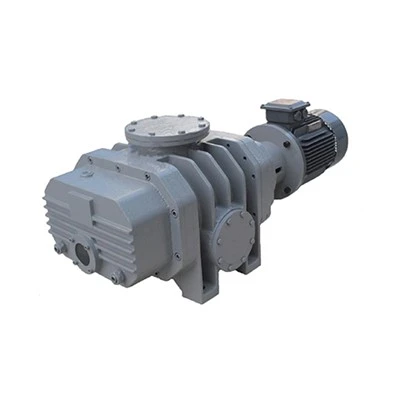
At the end of the day, commercial air treatment equipment isn’t just a product — it’s a long-term investment in your people, your customers, and your business’s success. The right features mean better productivity, higher customer satisfaction, lower energy costs, and compliance with health regulations. If you’re ready to upgrade your commercial space’s air quality and learn how our equipment can be customized to fit your specific needs, we’re here to help. Our team works with businesses of all sizes, from small retail shops to large industrial facilities, to find the right solution for your budget and space requirements. Don’t settle for one-size-fits-all air quality — reach out to our team today to start a conversation.
Vacuum Pump References
- American Society of Heating, Refrigerating and Air-Conditioning Engineers. (2021). Ventilation for Acceptable Indoor Air Quality. ASHRAE Standard 62.1.
- U.S. Environmental Protection Agency. (2022). Air Quality in Commercial and Institutional Buildings. EPA 402-K-22-001.
- National Institute for Occupational Safety and Health. (2020). Air Cleaning Technologies for Commercial and Industrial Workplaces. NIOSH Publication 2020-112.
- Underwriters Laboratories. (2021). Standard for Safety for Commercial Air Cleaning Devices. UL 867.
Suzhou Ruiqi Intelligent Equipment Co., Ltd.
As one of the most professional air treatment equipment manufacturers and suppliers in China, we also support custom service. As we have world-leading production equipment and strong manufacturing capabilities, we warmly welcome you to buy high quality air treatment equipment made in China here from our factory. Contact us for pricelist.
Address: No. 1729, Zhongshan South Road, Wujiang District, Suzhou City, Jiangsu Province, China, 16th Floor
E-mail: wts476626494@126.com
WebSite: https://www.ruiqicomp.com/
