If you’ve ever been hiking in the middle of nowhere, camping in a remote national park, or even out on a boat where cell service goes to zero, you’ve probably wondered: how do people stay in touch when every other communication tool dies? That’s where HF analog ham radio comes in—and as someone who’s been on the supplier side of this gear for over a decade, I get way too many questions from newbies who mix it up with VHF/UHF ham radios, CB, or even cell service. Let’s break this down like I would with a buddy grabbing a beer after a long day of shipping gear to folks all over the world. Analog Ham Radio
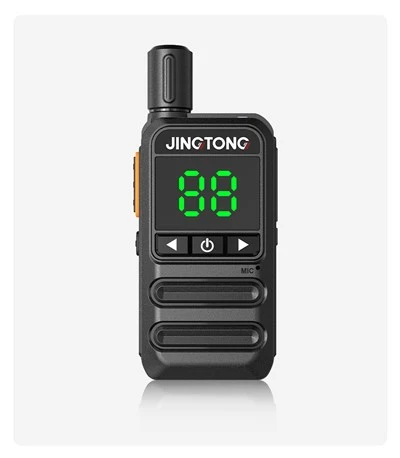
First, let’s kill the biggest myth: HF stands for High Frequency, but it’s not like a “higher tech” version of other radio bands. It’s a specific range of the radio spectrum, roughly 3 MHz to 30 MHz, that works totally different from the VHF (Very High Frequency) or UHF (Ultra High Frequency) bands most people use for walkie-talkies or local ham chats. VHF/UHF are line-of-sight—your signal has to go straight from your radio to another person’s antenna, no big obstacles like mountains or trees in the way, and the max range’s usually a few miles, maybe a dozen if you’re lucky. HF? That bounces off the ionosphere, a layer of charged particles way up in the atmosphere. So a kid in a bedroom in Ohio can chat with a ham in a tiny village in the Alps, or a fisherman off the coast of Alaska can check in with his family back in Texas—no cell towers, no Wi-Fi, no satellites, just radio waves doing their thing.
Now, why “analog”? Let’s contrast that with digital ham radios, which are super popular these days. Digital sends your voice as tiny, binary code bits, like how your phone sends texts, and it has to be really clear to work. If there’s even a little static, your signal cuts out entirely—no in-between. Analog HF works the old-school way: your voice gets turned into a continuous electrical wave that travels through the air, same as AM radio. If there’s static, you’ll hear that too, but you’ll still understand what the other person is saying. That’s a huge deal when you’re in a spot where the signal’s weak; a digital radio might just die on you, but analog keeps going. Don’t get me wrong, digital has its place, but when it comes to off-grid reliability, analog HF’s still the gold standard.
Let’s talk about who actually uses this stuff, because it’s not just a bunch of guys sitting in basements sending “CQ CQ DE KI5XYZ” (that’s ham code for “calling any station, this is KI5XYZ”) all day. Sure, there are hobbyists, but so do actual emergency responders. After Hurricane Ian knocked out cell service for millions in Florida, hams with HF radios were the only way some coastal towns could send requests for food or water. Boaters, pilots, even folks who live way out in rural areas where cable and cell never made it—they use HF all the time. And let’s not forget about the cool side: DXing, that’s the hobby of contacting hams in other countries. I’ve had customers who’ve spent years chasing “10-10” countries—places like Tuvalu, Nauru, or even Antarctica—just to add them to their logbooks. That’s way more than just a hobby; it’s a global community of people who help each other out when no one else can.
Now, as a supplier, I hear all the time, “Why should I buy an HF analog radio instead of that fancy digital one?” Let’s be real: HF isn’t for everyone. If you just want to chat with the local ham club a few miles away, stick to VHF/UHF—it’s cheaper and easier. But if you ever need to talk to someone across the country, or across the world, or you live in a place where cell service is non-existent, HF’s the only game in town. And analog HF? It’s simpler, too. You don’t need to mess with digital modes, flashing firmware, or subscription fees to use it. Turn it on, tune into a frequency (we call those bands, like 20 meters or 40 meters), and start chatting. That’s it.
Wait, let’s clear up a common confusion: CB radios. CB is Citizens Band, it’s around 27 MHz, right in the middle of the HF range, but it’s super limited—27 channels, low power, and designed for local use, mostly truckers. HF ham radios can put out way more power (up to 1,500 watts, though most hams use 100 watts or less for daily use), and there are hundreds of bands to choose from, each for different purposes. The 40-meter band is perfect for casual chats across the country, the 20-meter band is the go-to for DXing, and some bands even work better at night vs. during the day. It’s not just a single frequency; it’s a whole system.
Another thing people don’t talk about: gear requirements. You can’t just plug an HF radio into a car cigarette lighter and head out. You need an antenna, too. A lot of new folks think a little rubber duck antenna like the ones on walkie-talkies will work, but HF needs a bigger antenna—think a wire strung between two trees, a mobile antenna mounted on the roof of your truck, or a big vertical antenna for a base station. We sell basic antenna kits that are easy to install, even for someone who’s never held a soldering iron, so you don’t have to go out and spend a fortune on fancy gear right off the bat.
Let’s talk about the downsides, because I don’t want to sugarcoat it. HF signals can be finicky. The ionosphere changes based on the time of day, the season, even solar activity—like, when there are sunspots, you get better long-distance signals, but during solar minimum, some bands barely work. And there’s a lot of crowded frequencies; thousands of hams are using the same bands, so you might have to wait a minute to chat, or deal with some static from other signals. But that’s part of the fun, right? It’s not like flipping a switch on your phone; you have to learn how it works, how to tune in, how to adjust your power, that’s what makes the community feel so tight-knit. You’re not just using a device—you’re learning a whole new skill.
A lot of new hams ask me, “Do I need a license?” Yep, in most countries, including the US, you need a ham radio license to operate an HF radio. It’s not as scary as it sounds. The test covers basic radio rules, how the spectrum works, and a little safety stuff. We even offer free study resources for our customers, and a lot of hams will help you study if you ask. Once you get your license, you get a call sign—your unique radio ID, like KI5XYZ I mentioned earlier—and you’re part of the global ham community. No license, and you’re basically just a toy collector with a really fancy radio.
Now, why should you care? Let’s say you’re a parent whose kid loves camping in the backcountry. A cell phone dies, but if you have an HF radio (and a license), you can check in with them every day. Or if you’re a small business owner who has a remote location, like a cabin or a fishing camp, you don’t have to pay for expensive satellite internet just to stay in touch. And when there’s an emergency—natural disasters, power outages, whatever—HF radios don’t rely on anything man-made. They work when everything else is down. That’s the real superpower here.
I’ve been selling analog ham radio gear for 12 years, and I’ve seen this community go from a bunch of old guys in basements to a bunch of 20-somethings setting up radios in their vans, preppers stocking up, and even schools using HF radios for science projects. Last year, a high school group in Montana contacted me to buy a beginner kit, and they ended up contacting a ham in France for a school project—their teacher said it was one of the coolest learning experiences all year. That’s the stuff that makes this job worth it, not just selling radios, but helping people stay connected when it matters most.
If you’re on the fence about getting into HF analog ham radio, or if you already have a basic kit and want to upgrade, we’ve got you covered. We carry everything from beginner base stations to rugged mobile units for vehicles, plus antennas, cables, accessories, and even study guides for the ham license test. Our team’s all hams ourselves—we’ve spent countless hours on the radio, we’ve messed up installing antennas, we’ve spent hours chasing DX, so we know exactly what works and what doesn’t.
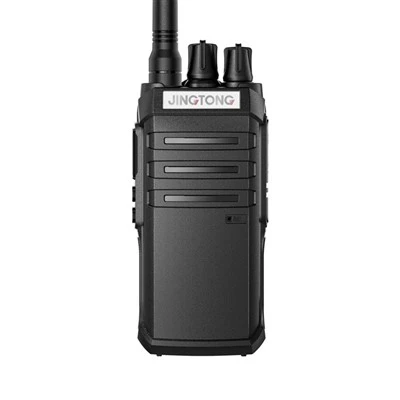
If you’re ready to take the next step, or you just have questions about what gear fits your needs, don’t hesitate to reach out. Whether you’re a total newbie who’s never touched a radio before, or a seasoned ham looking to upgrade your setup, we’re here to help you find the right analog HF gear that fits your use case.
5 Watt Walkie Talkie REFERENCES
ARRL. (2023). The ARRL Handbook for Radio Communications. American Radio Relay League.
Federal Communications Commission. (2024). Amateur Radio Service Rules. FCC.
Radio Society of Great Britain. (2022). HF Radio Operations Guide. RSGB.
Jingtong (Quanzhou) Electronics Co., Ltd.
We are one of the most professional analog ham radio manufacturers and suppliers in China, specialized in providing high quality customized service. We warmly welcome you to buy durable analog ham radio made in China here from our factory. For price consultation, contact us.
Address: No.288, Si Huang Industry Zone, Xia Mei Town, Nan An, Quanzhou, Fujian province, China 362302
E-mail: jtdjj@jtdjj.com
WebSite: https://www.jteradio.com/
