Hey there, quick question: if you’re looking at acid bricks for your plant or workshop, you’ve probably wondered, “What’s the actual weight of a standard one?” As someone who’s been supplying these bad boys for years, I get it—too many folks skip this tiny detail and end up with stuff that’s either too flimsy for their setup or way heavier than they need, messing with shipping and installation costs. Let’s break this down straight, no fancy jargon, just what you actually need to know. Acid Bricks
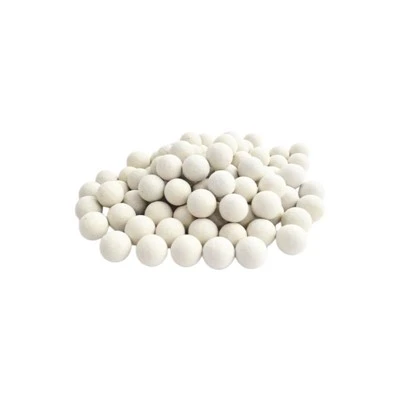
First off, let’s nail down what a “standard acid brick” even is, because that’s where a lot of confusion starts. These aren’t your regular patio bricks, y’know? Acid bricks are specifically made to fend off harsh stuff—sulfuric acid, hydrochloric acid, all that corrosive junk you find in chemical plants, plating shops, fertilizer facilities, even wastewater treatment plants. They’re baked at super high temps (like 2,500°F+) from clay or alumina-silica, which makes ’em dense, non-porous, and basically immune to eating away from chemicals.
Most of what I sell as a “standard” is the 9×4.5×2.5 inch size. Yeah, that’s the industry go-to—easy to handle, fits most common mortar lines, works for just about any standard acid-resistant lining job. I’ve seen some smaller or larger ones, but if someone asks for a standard, that’s the size we point to every time.
Now the weight. Here’s the part that trips people up: it’s not just the size. The material makes a huge difference. Let’s be real—acid bricks aren’t all the same. There are two main types that count as standard: low-alumina (around 40% alumina) and high-alumina (70%+ alumina).
Low-alumina standard acid bricks are the bread and butter for most mid-level acid exposure. They’re lighter, which is a big win for installation—your bricklayers don’t have to heft a 10-pound block all day, and you save on shipping because less weight per pallet means fewer pallets to move. A standard low-alumina brick? That lands right around 5 pounds, give or take a few ounces. I test every batch we get, and even with small variations from kiln to kiln, it never strays more than 0.2 pounds. That’s consistent, no surprises.
High-alumina standard bricks? They’re the heavy hitters for super harsh environments—like where you’re dealing with concentrated sulfuric acid or really high temps (over 1,800°F). More alumina means denser, more durable, but also way heavier. A standard high-alumina acid brick here? Closer to 7 pounds. Yep, that’s a whole 2-pound difference. Worth it for the right job, but you can’t just swap a high-alumina for a low-alumina without thinking about the extra weight—floors, shelves, even the mortar can only handle so much.
Wait, hold on—why do some suppliers say different numbers? Oh right, some use the “nominal” size instead of the actual. A lot of bricks are a tiny bit undersized (like 8.75×4.25×2.3 inches) to make mortar lines easier, and that shaves a bit off the weight. But our standard is “actual” size, so the numbers I gave are spot-on. No funny math here.
Let’s talk why this weight matters, ’cause it’s not just a trivia question. First up: installation. If you’re tiling a 1,000-square-foot floor with low-alumina bricks, that’s roughly 5,100 bricks. Multiply by 5 pounds? That’s 25,500 pounds total, or like 12.75 tons. If you accidentally ordered high-alumina, that’s 35,700 pounds—17.85 tons. Your concrete slab might not be rated for that extra weight, and fixing a slab after the fact is way pricier than just checking the weight upfront.
Shipping is another big one. Pallets of acid bricks usually hold between 500 and 600 bricks. For low-alumina, that’s 2,500 to 3,000 pounds per pallet. Most freight carriers have weight limits for full truckloads (usually around 44,000 pounds total), so you can fit 14 pallets of low-alumina, easy. But high-alumina pallets? 500 bricks would be 3,500 pounds, so you’re looking at only 12 pallets per truckload. That’s 2 fewer pallets, which means more trips, more costs. I’ve had customers get burned here before—they didn’t check the weight, ended up paying $1,000+ extra in shipping just because the bricks were heavier.
And let’s not forget handling on the job site. Bricklayers are human—lifting a 7-pound brick all day is way harder than lifting a 5-pound one. That can lead to slower work, more tired workers, even more dropped bricks (which are a pain to replace). We’ve seen installations go 15% faster with low-alumina bricks, just because they’re lighter.
Wait, but what about edge cases? I get questions sometimes about custom standard sizes. Some plants use 10x5x3 inch bricks for specialty linings. Those are usually high-alumina, so they hit around 12 pounds. But that’s a custom standard, not the industry one we talk about. If you don’t specify, I’m gonna send you the 9×4.5×2.5 inch one—so make sure to mention if you need the heavier or lighter type.
Another thing: porosity. Some acid bricks are more porous than others, and even two bricks the same size can weigh different if one has more air pockets. We only source bricks from reputable manufacturers that keep porosity under 5% for standard acid bricks, so our weight is consistent. If you get cheap bricks from no-name brands, you might find one that’s 4 pounds and another that’s 6 pounds—total mess for your project. That’s why going with a supplier who stands behind their products matters.
Let me give you a quick example from a recent job. A customer out in Ohio was lining a tank for a fertilizer plant, using concentrated nitric acid. They initially ordered low-alumina bricks, but when we did a quick check-in, we told them high-alumina would be better. They asked about weight—we walked through the 5 vs 7 pound number, and they adjusted their installation prep to reinforce the tank’s support beams. Saved ’em from a big problem later. That’s the kind of thing I don’t skip—no matter how small the question is, it’s important.
So to wrap this up: the industry standard acid brick (9×4.5×2.5 inch) weighs around 5 pounds for low-alumina (most common use case) and ~7 pounds for high-alumina (heavy-duty, harsh acid). Always confirm the material and size, don’t just go by “standard” off the box. Weight isn’t a trivial detail—it impacts installation, shipping, and structural safety.
If you’re gearing up for a project, need to order, or just have questions about what works best for your setup, hit me up. I can walk through material options, weight specs, and even help you calculate how many bricks you’ll need. No salesy nonsense, just honest answers.
Ceramic Honeycomb References
- ASTM C126-21, Standard Specification for Masonry Units, Clay Concrete, and Stone
- Acid Brick Technical Manual, National Association of Corrosion Engineers (NACE), 2022
- Industrial Corrosion Control Handbook, McGraw-Hill, 2021
Jiangxi Pingxaing Longfa Enterprise Co., Ltd.
With abundant experience, we are one of the most professional acid bricks manufacturers and suppliers in China. Please feel free to wholesale bulk premium acid bricks at competitive price from our factory. Good service and quality products are available.
Address: Xiabu Industrial Park, Xiangdong, Pingxiang, Jiangxi, 337000, China
E-mail: admin@jxlongfa.cn
WebSite: https://www.lfceram.com/
