Let’s cut to the chase—if you’ve stared at your same patch of dead, muddy lawn a hundred times, wondering if it’s worth dumping real grass for that plastic-like stuff everyone’s posting on Instagram, you’ve asked the exact same question I get in my DMs every single day: Is backyard artificial turf actually a good investment? As someone who’s been in the artificial turf game for years (I sell it, I install it, I even fix the weird stuff that goes wrong when people skip the prep work), I’ve heard every take—from “it’s just fake grass for rich people” to “it’s the greatest thing since sliced bread” — and today I’m breaking this down like I do for my regulars, no fancy sales jargon, just real, unfiltered info. Backyard Artificial Turf
First off, let’s talk about the big one: cost. I know what you’re thinking—“Isn’t turf super expensive upfront?” Yeah, it’s not like buying a $50 roll of sod from Home Depot and throwing it down on a Saturday. But let’s do the math, not the emotional hot take. When you get real grass, what’s the hidden tab? I’m talking about water bills—oh my god, the water bills. Depending on where you live, that’s 500 to 1,000 gallons of water a week just to keep your lawn alive, especially in the summer when it’s 90 degrees and your grass is browning faster than your morning coffee cools. I’ve had a customer in Phoenix last year whose water bill went up $180 a month during the dry season—talk about a gut punch. Then there’s fertilizer, pesticides, and herbicides. Newsflash: those aren’t harmless. Studies have shown that the stuff you spray on your lawn runs off into rivers and streams, and even seeps into your own drinking water. Not to mention mowing—if you’ve got a 1,000-square-foot lawn, that’s a gallon of gas every two weeks, plus the cost of a lawnmower and the time you spend pushing it around. I can’t tell you how many times I’ve heard people say they wasted a whole Saturday trying to fix a patch of dead grass after their dog peed on it, and by the way, dog pee kills real grass too—fun, right?
Now let’s compare that to turf. The upfront cost is usually between $12 and $25 a square foot, including installation, depending on the type you pick (there’s stuff for pets, stuff for kids playing, even stuff that looks so real your neighbor will do a double take). But wait—how long does it last? A good artificial turf job from a reputable installer like me? 15 to 25 years. I’ve got one customer who had turf installed 18 years ago, and it still looks better than most new lawns I see. That means no more mowing—ever. No more water bills for your lawn. No more fertilizer. No more pesticides. Let’s run the numbers for a 1,000-square-foot lawn. Let’s say real grass costs you $300 a year in water, $100 in fertilizer/pesticides, $150 in gas and maintenance for your lawnmower—total $550 a year. Over 10 years, that’s $5,500. Over 20 years, that’s $11,000. And that’s if your grass stays perfect. Once it starts dying, you’re paying for sod replacement, which is another $2 per square foot, so $2,000 for a 1,000-square-foot lawn, plus the labor to install it. All of a sudden, the turf’s upfront cost—say $15,000 for 1,000 square feet—starts to look like a steal, right? Especially when you factor in that turf’s basically zero maintenance. I’ve got a customer with three kids and a golden retriever—she told me after installing turf, she spends 10 minutes a week on lawn maintenance, and that’s just brushing off leaves. That’s time she can spend on actual fun stuff, not pulling weeds.
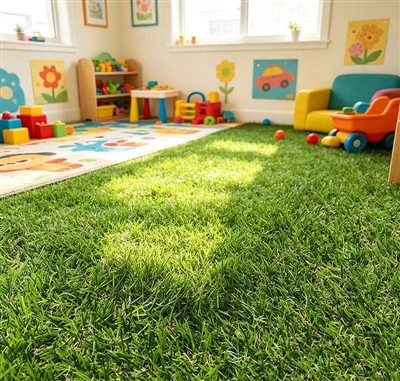
Next, let’s talk about the stuff that makes turf great for real people, not just Pinterest boards. First up, pets. If you’ve ever had a dog, you know the struggle: they pee on the same spot, burn a yellow patch into your lawn, or track mud into the house after a rainstorm. Turf solves all that. Wait, but what about the smell? I get that question all the time. Modern pet-friendly turf has a special drainage layer underneath, plus it’s treated to resist odor. You just need to hose it down once a week with a little bit of mild soap, and that’s it. No more digging up mud, no more dead grass patches, no more scrubbing your dog’s paws every time they come inside. I installed turf for a guy who has two German Shepherds, and he told me the first week, his wife actually did a happy dance because she no longer had to mop muddy paw prints off the kitchen floor every single day. That’s not a “rich person” perk—that’s a sanity saver. And for kids? Turf is soft, it doesn’t get lumpy or full of dandelions, and it drains way faster than real grass, so after a rainstorm, you can go play in an hour instead of waiting three days for your lawn to dry. I’ve seen kids fall on turf and not get scraped knees like they do on concrete or even rough real grass. That’s a big deal for parents.
But wait—let’s be real, it’s not all sunshine and rainbows. I’m not gonna sugarcoat the downsides, because my regulars know I call it like it is. First, upfront cost is a big barrier. It’s not something you can whip out your credit card for on a whim, especially if you’ve got a big yard. But here’s the thing: most people finance it now, same as they do for a new fence or a roof. There are payment plans with 0% interest for 12 months, so you don’t have to pay everything at once. Another downside? Cheap turf. If you go to some fly-by-night company, they’ll sell you $5 a square foot turf made from thin, flimsy plastic that fades in a year, or they’ll skip the proper base layer. That’s a disaster. If the base is bad, your turf will get lumpy, drain poorly, and start smelling like stagnant water. So you have to do your research—don’t just pick the cheapest quote. Go with a company that has good reviews, that shows you samples, that explains the prep work. I always tell people: I’d rather you wait six months, save up, and get a good job done right, than cut corners and have to replace it in two years.
Another common myth: turf is bad for the environment. Wait, hold on—let’s fact-check that, because this is one I hear all the time. Let’s compare the environmental impact of real vs. fake grass. Real grass uses a ton of water. In places like California or Texas, during a drought, people get fined for overwatering their lawns. Turf uses zero water for upkeep. Think about that—no water waste, no runoff from fertilizers and pesticides that poison local waterways. Wait, but what about the plastic? Good question. Most artificial turf is made from polyethylene, which is recyclable. A lot of the good turf companies now offer take-back programs when your turf reaches the end of its life, so it doesn’t end up in a landfill. Also, let’s think about what happens if you leave a dead lawn—you might have to tear it out and replace it with more sod, which uses more water, more resources, more transportation. Turf, once installed, lasts 20 years with no replacement, so that’s less waste overall. I’m not saying turf is 100% perfect environmentally, but it’s way better than the alternative for most people.
Now, let’s talk about the property value angle, because that’s something a lot of people don’t consider. When you go to sell your house, what do buyers want? Low maintenance. A backyard that’s usable, not a hassle. I’ve had so many customers tell me that after installing turf, their house sold faster than their neighbor’s house down the street with a real lawn. Why? Because no one wants to deal with a lawn anymore. If a buyer is looking at two identical houses, one with a lawn that’ll require 2 hours of maintenance a week, and one with turf that requires 10 minutes a week, guess which one they pick? And I’ve seen data that says turf can increase property value by anywhere between 5% and 15%, depending on the area. That’s a huge return on investment when you’re ready to sell.
Wait, but let’s make sure this is tailored to your actual lifestyle. Who is turf a good investment for? If you work 60 hours a week and don’t have time to mow, weed, and water your lawn—yes. If you have kids or pets that love playing outside—yes. If you live in a dry area where water is expensive or restricted—yes. If you hate looking at a patchy, dead lawn in the summer—yes. Who is it not a good investment for? If you rent your home—then yeah, it’s probably not worth it, because you can’t take it with you. If you have a super small budget and can’t afford the upfront cost even with financing—wait, but I do offer flexible plans, so hit me up if that’s you. If you love the idea of a real lawn, are willing to put the time and money into it, and have fun mowing on weekends—then turf might not be for you, and that’s totally fine. No hard feelings.
Let me share a quick story that sums this all up. Last year, I installed turf for a guy named Mike who’s a software engineer, works from home, and has two little girls. Before, he told me he spent every Saturday morning fighting his lawn—trying to fix the brown spots, mow, pull weeds— and by the time he was done, he was too tired to play with his kids. Six months after installation, he sent me a text: “I just spent the whole Saturday building a treehouse with my girls. The only lawn work I did was brush off a few leaves. This is the best money I ever spent.” That’s not about fake grass. That’s about getting your time back. That’s about not having a thing that stresses you out every single week.
At the end of the day, an investment is something that gives you value over time, right? That could be monetary, or it could be peace of mind, or time with your family. For most people I work with, artificial turf checks all those boxes. Is it perfect? No. Is it right for everyone? No. But if you’re tired of dealing with a lawn that’s more work than fun, if you want a backyard you can actually use year-round, if you’re looking for something that saves you money and time for decades to come—then yeah, it’s absolutely worth it.

If you’re ready to stop staring at that dead patch of grass and get a backyard you’ll actually love, reach out to us for a free, no-obligation quote. We’ll come out, measure your space, show you samples of different turf types (the pet-safe kind, the kid-friendly soft kind, the ultra-realistic kind), and answer all your questions—no sales pressure, no hidden fees, just straight talk. Stop wasting your weekends on lawn work, and start enjoying your backyard.
Garden Artificial Turf References
- American Society of Landscape Architects. (2022). Residential Landscaping Costs and Maintenance Trends.
- Environmental Protection Agency. (2021). Water Conservation for Lawns and Gardens.
- Turf Manufacturers Association. (2023). Artificial Turf Lifespan and Performance Standards.
- National Association of Realtors. (2022). Home Improvements That Boost Property Value.
- University of California Agriculture and Natural Resources. (2020). Environmental Impacts of Lawn Care Chemicals.
Yiwu Duofu Artificial Flower Co., Ltd.
As one of the most professional backyard artificial turf manufacturers and suppliers in China, our products have good reputation in the market. Please feel free to wholesale bulk custom made backyard artificial turf from our factory. Good service and quality products are available.
Address: Building B, No. 566 Chunhua Road
E-mail: 13373813738@aliyun.com
WebSite: https://www.chinaturffactory.com/
