Let’s talk about something I get asked at least a dozen times a week as a bag closer machine supplier: How do you actually know if your bag closer machine is working properly? I’ve seen so many operators spend hours troubleshooting tiny, avoidable issues, or worse, finish a run with bags that aren’t sealed tight enough—costing them time, product, and even money in waste. The truth is, checking a bag closer machine isn’t rocket science, but it does require knowing what to look for, step by step, especially if you rely on these machines for high-volume work like agricultural packaging, construction materials, or retail goods. I’ve been in this game for 12 years now, and most of the problems I help customers fix start with skipping simple, regular checks instead of waiting for a breakdown mid-run. Bag Closer Machine

First, let’s start with the most basic pre-use check: the stitching and sealing. This is the whole point of a bag closer machine, right? If the stitches are bad, the seal fails, and your bag won’t hold whatever’s inside. A lot of new operators just grab a bag, thread it, and hit start, but I always tell them to do a test run first—no product, just empty bag. Let’s break down what to look for here. First, the stitch pattern: a properly working machine should produce uniform stitches, about 6 to 8 stitches per inch, depending on the machine model (I always note that in the manual for every unit we sell). If stitches are skipping, loose, or uneven, that’s a red flag. Last month, a customer in Iowa called me panicking because his machine was leaving half the stitches loose on 50-pound seed bags. When he sent a photo, I could see the stitch length was all over the place—turns out he hadn’t tightened the tension dial after switching to a thinner thread. The tension dial is there for a reason: if the upper thread is too loose, it loops under the bag; too tight, it breaks mid-stitch. For the test run, after sewing, pull gently on both sides of the stitch line—if it doesn’t unravel, that’s a good sign. Also, check the seal (if your machine has an integrated heat seal feature, which most modern models do). The seal should be continuous, no gaps, and it shouldn’t peel apart when you tug it lightly. I always advise customers to test this with the same bag material they use for their actual runs—thick polypropylene is way different than thin paper, so a test run on the wrong material won’t tell you much.
Next up, the thread system. I can’t tell you how many times a small thread issue causes a major delay. Thread is the lifeline of a bag closer machine, so checking it before every shift is non-negotiable. Start with the thread spool: make sure it’s sitting securely on the spindle, not wobbling. A wobbly spool will cause tangles and breaks mid-stitch. Then, check the thread path—all the guides, tension discs, and the take-up lever. Even a tiny piece of lint or a loose thread can catch here, causing the thread to snap. I always keep a small wire brush in my toolbox for this, just to gently clear lint off the guides. If you’re using synthetic thread (which most operators are now, because it’s more durable), make sure it’s not frayed. Frayed thread will break easily and cause uneven stitches. Another check: the bobbin (for machines that use a bobbin). If your machine has a bobbin case, pull out the bobbin and check it—thread should be wound evenly, not lumpy. A lumpy bobbin will cause tension issues, just like a wobbly spool. Last year, a customer in Texas told me his machine was breaking thread every 10 bags; when he showed me the bobbin, half the thread was wound on the side, not the center. He was using a cheap, unbranded bobbin, and it had warped over time. I always recommend using the bobbins that come with your machine, or high-quality replacements—cheap parts cause more problems than they save.
Then there’s the mechanical parts, which are easy to overlook because they’re not as visible as the stitch line. A bag closer machine has a lot of moving parts: the needle, the looper, the presser foot, and the feed dogs. Let’s start with the needle: it should be sharp, not bent or dull. A dull needle will not only cause skipped stitches but can also damage the bag material, leaving tiny tears that lead to leaks. I tell customers to change the needle after every 100 hours of use, or sooner if you notice it’s bent. You can check the needle by running your finger (gently!) along its length—if it’s not smooth, replace it. Next, the looper: this is the part that locks the top and bobbin threads together, right? If the looper is misaligned, the stitches won’t lock. You can check alignment by looking at the gap between the needle and the looper—most machines have a manual that specifies the correct gap, usually about the thickness of a piece of paper. If the gap is too big or too small, you’ll need to adjust the set screw, which is a simple fix if you catch it early. The presser foot is another key part: it applies even pressure to the bag as it’s being sewn. If the presser foot is loose or worn, it will cause uneven feeding, so the stitches will be uneven along the length of the bag. You can test this by running a test bag and seeing if it feeds straight—if it curves to one side, the presser foot is probably not adjusted right. I also recommend lubricating moving parts every 50 hours, as per the manual. Linting and dust can build up fast in these machines, so a little light oil (only the oil recommended by the manufacturer—never use generic motor oil) will keep parts moving smoothly and prevent overheating.
Now, let’s talk about operational performance, which is all about how the machine handles in a real run, not just a test bag. Speed is a big one—most bag closer machines have a maximum speed, usually 1,500 to 2,500 stitches per minute. If your machine is running slower than usual, or you notice it stuttering when you’re sewing a full bag, that’s a sign something’s wrong. It could be a clogged air filter (if you have a pneumatic machine) or a loose belt. I always ask customers to check their machine’s manual for speed specs, and compare their current speed to that—if it’s off, start with the simplest checks: air filter, belt tension, power supply. Speaking of power supply, if you have an electric machine, a fluctuating voltage can cause the motor to underperform, leading to inconsistent stitching. A quick check with a multimeter (or even a basic outlet tester) will confirm if your power supply is steady. For pneumatic machines, check the air pressure—most need 80 to 100 PSI to work properly. If the air pressure is too low, the machine won’t have enough force to drive the needle and looper, leading to weak stitches or skipped steps. I once had a customer who was running his machine off a small portable air compressor that couldn’t keep up, so every time he sewed a 50-pound bag, the pressure dropped and the stitches were bad. Swapping to a larger stationary compressor fixed the problem immediately.
Another often-overlooked check is the trimmer, if your machine has one. The trimmer cuts the thread at the end of the stitch, and if it’s dull or misaligned, it will fray the thread ends, which can lead to unraveling stitches later. You can test the trimmer by sewing a test bag and looking at the thread ends—they should be clean, not frayed. If they’re frayed, adjust the trimmer blade or replace it. Last, but definitely not least, is the seal integrity for products that need a hermetic or secure seal, like food-grade items or hazardous materials. If you’re packing flour, for example, you need to make sure no air gets in, so the seal has to be airtight. The best way to test this is to inflate a sealed test bag slightly, submerge it in water, and look for bubbles—no bubbles means a good seal. For hazardous materials, you might need to do pressure tests to make sure the seal won’t break during transport. I always remind food and chemical industry customers that regular seal checks aren’t just about product integrity—they’re also about compliance with industry regulations.
Now, let’s get to the part where I tell you what to do if something is wrong, because checking is one thing, fixing is another. A lot of customers call me when they have a problem and they’re ready to replace the whole machine, but most issues are simple fixes. For example, skipped stitches? Check the needle, thread tension, and looper gap first, not the machine itself. Uneven stitches? Check the presser foot and feed dogs. Broken thread? Check the thread path, bobbin winding, and tension. The key here is to do regular checks, not just when something breaks. I have a checklist that I give every new customer, and it’s 5 minutes long, to do before every shift: 1. Test run on empty bag, check stitch and seal quality. 2. Inspect thread spool, bobbin, and thread path for tangles or lint. 3. Check needle and moving parts for wear. 4. Verify air pressure or power supply. 5. Check trimmer blade. That’s it—5 minutes, and it can prevent hours of downtime later.
At the end of the day, a bag closer machine is a workhorse, but like any tool, it needs regular care and checks to keep working properly. Skipping even one of these steps can lead to bad bags, wasted product, and lost revenue. I’ve been in this industry long enough to know that the best operators are the ones who are proactive, not reactive. If you’re having trouble checking your bag closer machine, or you need a replacement part, or you’re in the market for a new machine that’s built to handle high-volume, consistent runs, don’t hesitate to reach out. Whether you’re a small farm packaging 100 bags a day or a large manufacturing plant packing 10,000 bags, I can help you find the right solution and make sure your machine is working at its best.
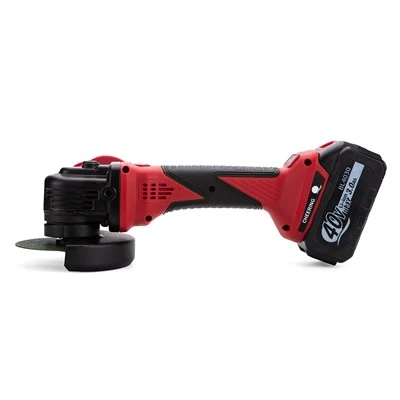
Electrical Angle Grinder References
- Industrial Bag Closer Operation and Maintenance Manual, International Packaging Association, 2021.
- Best Practices for Stitching Integrity in Flexible Packaging, Journal of Industrial Packaging Technology, Vol. 18, No. 2, 2022.
- Troubleshooting Common Issues in Portable Bag Closer Machines, Equipment Maintenance Journal, 2020.
Zhejiang Cheering Sewing Machine Co., Ltd.
With abundant experience, we are one of the most professional bag closer machine manufacturers and suppliers in China. Please feel free to wholesale advanced bag closer machine for sale here from our factory. We also accept customized orders.
Address: No.69 Heping Road, Lishui, Zhejiang, China
E-mail: gxjlq@126.com
WebSite: https://www.cheering-machinery.com/
