Hey there, let’s cut to the chase—if you work in manufacturing, power generation, HVAC, or any industrial space with big, loud machinery, you’ve probably heard of silencers. But have you ever wondered what a compact industrial silencer actually is, and why it’s way more than just a tiny noise cap for your equipment? As someone who’s been supplying these things for years, I’ve seen so many folks mix up standard silencers with compact ones, and that’s a mistake that leads to wasted space, extra costs, or even worse, noise that still breaks rules. Let’s break it down, no boring jargon, just real talk. Industrial Silencers

First off, let’s get the basics straight. Industrial equipment—think exhaust fans, air compressors, gas turbines, HVAC blowers, even those big pumps at a wastewater plant—makes noise when it runs. That noise isn’t just annoying; it’s a problem. OSHA sets strict limits on how much noise workers can be exposed to over an 8-hour shift (let’s be real, 85 decibels max—roughly the volume of a lawnmower, and if you’re running a machine that’s louder than that, people are gonna get hurt, or you’re gonna get fined hard). Silencers (also called mufflers, for the car guys out there) are designed to cut that noise before it escapes into the air.
Now, what makes a compact industrial silencer different from a regular one? A standard silencer might be big, bulky, like a 6-foot-long cylinder that takes up half the equipment room. But compact models are engineered to deliver the same noise reduction (that’s called insertion loss, if we’re being technical) in a way smaller footprint. That’s the sweet spot for places where space is tight—like a crowded manufacturing floor, a rooftop HVAC setup where there’s no extra room, or a skid-mounted power unit that’s built to go straight to a job site without extra bulk.
Wait, but here’s the key point: compact doesn’t mean less effective. A lot of people think “small = weak,” but that’s not true for quality compact silencers. We design ours to target the exact frequencies your machinery makes the most of. For example, an air compressor makes a lot of high-pitched whine, while a gas turbine has deep, low rumble. A standard silencer might handle all frequencies but take up too much space, but a compact one uses tuned internal components—like absorption linings, baffles, or reactive chambers—to zero in on those problem frequencies. No wasted material, no wasted space, just precise noise control.
Let me give you a real example. Last year, we worked with a small-scale food processing plant that had a new exhaust blower installed in their production area. The plant floor is packed with mixers, packaging lines, and storage tanks—there was literally no extra space around the blower’s exhaust stack. The old plan was to use a standard 4-foot silencer, but that would have meant rerouting a bunch of pipes and taking up space they needed for new packaging equipment. We supplied a compact industrial silencer that’s only 18 inches long, fits right onto the exhaust stack, and reduced the noise from 92 dB to 78 dB—way below OSHA limits, and they didn’t have to rearrange a single thing on the floor. They saved thousands in retrofits, and their workers stopped complaining about the constant roar near the blower. That’s the magic of these things.
Now, how do compact silencers actually work? Let’s keep this simple, not a textbook chapter. There are two main types of technology we use, and most compact models combine both a little. The first is absorption: we line the inside of the silencer with sound-absorbent material, like fiberglass or mineral wool, that soaks up sound waves before they can escape. The second is reflection: we put baffles or chambers inside that bounce sound waves around, canceling them out before they leave. For a compact unit, we shrink this design down without messing up the airflow—because if a silencer restricts airflow too much, it makes your machinery work harder, uses more energy, and can even damage the equipment over time. That’s a huge no-no. A bad silencer can cost you more in electricity bills than the noise fines, so airflow is non-negotiable.
What kind of equipment are compact silencers used for? Let’s list the common ones, because that’s what most people care about:
- HVAC systems: Rooftop units, air handling units (AHUs), and exhaust fans in buildings where space is at a premium (like hospitals, schools, or high-rise offices where every square foot matters).
- Air compressors and vacuum pumps: Super common in manufacturing, workshops, and auto shops, and their noise is usually high-pitched and really grating—compact silencers fix that without taking up garage space.
- Small to medium gas turbines and generators: Skid-mounted units that are transported to job sites (like construction sites or temporary power for events) need compact silencers so they don’t add extra weight or bulk to the skid.
- Wastewater and industrial pumps: Plants where pumps are packed together in small rooms, so any equipment added has to fit into tight corners or above pipes.
- Process exhaust systems: In chemical or pharmaceutical plants, where exhaust fumes need to be vented, and noise has to be controlled without blocking the vent’s airflow.
Wait, but what should you look for when buying a compact industrial silencer? A lot of suppliers will sell you a small silencer that’s cheap, but it’s a waste of money because it doesn’t do the job right. Let me tell you the things we always check for with our customers, because this is where people mess up:
First, make sure it’s sized correctly for your equipment. You can’t just grab a 6-inch compact silencer for a 6-inch exhaust pipe—you have to calculate the airflow rate, the pressure of the exhaust, and the noise frequency of your machine. A good supplier will ask you for those details, not just sell you a one-size-fits-all. We always have our team walk through that with customers, because we’d rather get it right the first time than have them call us back in six months complaining it’s too loud.
Second, check the noise reduction specs. It’s not just about the total dB it cuts—you want to make sure it targets the exact frequencies your machine produces. For example, a blower might make most of its noise at 500 Hz, while a compressor is at 2000 Hz. A generic small silencer might cut 10 dB at both, but a tuned compact one will cut 15 dB at the problem frequency, which makes a way bigger difference in how it sounds to workers and how it meets regulations.
Third, airflow performance. Like I said earlier, a silencer that restricts airflow costs you money. Look for something with a low pressure drop—meaning the air flows through it easily, so your equipment doesn’t have to work harder. Our compact silencers are designed with smooth internal passages so pressure drop is minimal, usually less than 0.5 PSI, which is barely noticeable on your energy bill.
Fourth, build quality. Industrial environments are tough—they get hot, cold, dusty, wet, sometimes even exposed to chemicals. A cheap compact silencer might rust after a year, or the lining might fall apart, so you have to replace it way sooner than you should. We use heavy-gauge steel for our shells, and the linings are wrapped in a protective membrane so they don’t get damaged by dust or moisture. That’s why our customers come back—our silencers last 10+ years, even in harsh conditions.
I’ve seen so many examples of what happens when you skip these steps. A few years back, we had a customer who bought a $200 compact silencer from a random online supplier for their air compressor. It fit on the pipe, but it only cut 3 dB of noise—they still got a noise violation six months later. When they took it off, they saw the internal baffles were made of thin plastic that melted a little from the compressor’s heat, so it barely worked anymore. They ended up buying our compact silencer, which cost three times as much, but it saved them over $10,000 in fines and energy costs in the first year alone. That’s the difference between a cheap quick fix and a real solution that works.
Another thing a lot of people don’t think about: regulatory compliance. Depending on where your facility is, you might have local noise ordinances, OSHA rules, or ISO standards you have to meet. A good compact industrial silencer will be tested to meet these standards, so you don’t have to guess. We have all our silencers third-party tested for insertion loss and pressure drop, so when a customer asks for documentation to show to their facility manager or a regulatory inspector, we can send it over right away. No guesswork, no hassle.
Wait, and what about custom applications? Sometimes off-the-shelf compact silencers don’t fit exactly, or your equipment has a unique exhaust design. We do custom compact silencers all the time—for things like unusual pipe sizes, specific noise profiles, or equipment that’s installed in really tight spots. Last year, we worked with a mining company that had a small auxiliary generator installed in a cramped utility trailer. The trailer was so tight that the exhaust pipe ran right next to a fuel line, so we had to make a compact silencer that was not only small enough to fit but also heat-resistant so it wouldn’t be a fire hazard. We designed one that’s only 12 inches long, can handle temperatures up to 500°F, and cut the noise from 95 dB to 76 dB. They ended up using that same design for 12 more generators across their sites. That’s the beauty of compact silencers—they’re flexible enough for almost any job, as long as you work with a supplier that knows what they’re doing.
Let me also bust a myth I hear all the time: compact silencers are only for small machines. No way. We make compact silencers for gas turbines up to 1 MW—those are big power units, but their skid-mounted design requires a silencer that doesn’t add extra length or weight. It’s not as small as the blower one I mentioned earlier, but it’s way smaller than a standard silencer would be for that turbine. So even for larger equipment, if space is a problem, compact is the way to go.
Another thing to consider: maintenance. Industrial equipment gets dirty, so your silencer needs to be easy to clean and inspect. A lot of compact silencers have removable end caps so you can check the lining or clear out any dust buildup without taking the whole thing apart. That’s a big plus—you don’t want to have to remove the silencer every year just to do basic maintenance. All our compact models have that feature, because we know downtime costs you money.
Now, let’s talk about when you should actually use a compact industrial silencer, versus a standard one. If you have open space for your exhaust stack, a standard silencer is totally fine—they’re often cheaper, and they work great. But if you’re in any of these situations, compact is probably your best bet:
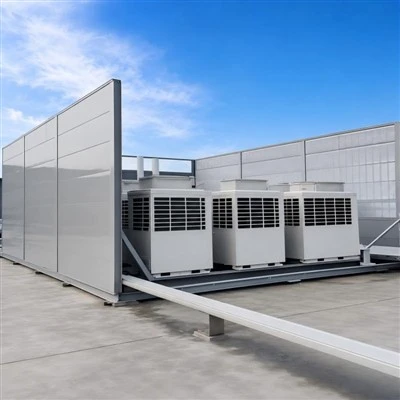
- Rooftop equipment where there’s no extra space between the unit and the roof edge, or between multiple units on the same roof.
- Crowded manufacturing floors where every inch of space is used for production.
- Skid-mounted or portable equipment that needs to be transported to job sites without disassembly.
- Facilities with strict noise limits near residential areas (like factories on the edge of town) where you need effective noise control without extra bulk.
- Any space where adding a big silencer would require modifying pipes, ductwork, or other existing equipment.
I’ve been in the industrial silencer game for over 15 years, and one thing I’ve learned is that a lot of companies overlook how important noise control is until it’s a problem. They’re focused on production output, equipment costs, and safety, and noise is an afterthought—until they get a fine, or workers complain about headaches or hearing issues from constant noise. A good compact silencer is a small investment that saves you a ton of money, keeps your workers safe, and avoids regulatory headaches.
Let me wrap this up straight—if you’re dealing with loud industrial noise, and you’re tight on space, don’t settle for a cheap, ineffective small silencer. A quality compact industrial silencer is engineered to fit your space, cut the noise you need, and keep your equipment running smoothly without wasting energy.
If you’re ready to stop dealing with excessive noise, or you have questions about whether a compact silencer is right for your equipment, reach out to our team. We’ll walk through your needs, help you pick the right size and type, and make sure you get a solution that fits your space, your budget, and your compliance requirements. No pushy sales stuff, just real advice from people who’ve been doing this for years.
Acoustic Pods References:
- Occupational Safety and Health Administration (OSHA). Industrial Noise Exposure Limits. U.S. Department of Labor, 2023.
- American Society of Heating, Refrigerating and Air-Conditioning Engineers (ASHRAE). HVAC Systems and Equipment Handbook, Chapter 27: Noise Control. ASHRAE, 2022.
- Noise Control Engineering Association (NCEA). Compact Silencer Design Guidelines for Industrial Applications. NCEA, 2021.
Nanjing Huajing Environmental Engineering Co., Ltd.
Nanjing Huajing Environmental Engineering Co., Ltd. is one of the most professional industrial silencers manufacturers and suppliers in China, also supports custom service and OEM service. Please feel free to buy durable industrial silencers at competitive price from our factory. Welcome to contact us for quotation.
Address: Room 518, No.12 Jinlan Road, Dongshan Subdistrict, Jiangning District, Nanjing City, Jiangsu Province, China
E-mail: contact@hualiving.cn
WebSite: https://www.hjacoustics.com/
