If you’ve ever visited a cement plant, a lime processing facility, or even a rare earth mineral refining site, you’ve probably seen one of the most iconic (and massive) pieces of industrial gear out there: a rotary kiln. These things aren’t just big metal tubes rolling around on trunnions—they’re precision-built workhorses that turn raw materials into usable, sellable products. As a rotary kiln supplier, I get asked all the time by clients and even new ops managers: “What actually makes up a rotary kiln, anyway?” Skip the boring engineering textbook jargon for a sec—let’s break down the main parts like we’re geeking out over gear I’ve installed myself over the last decade. Rotary Kiln
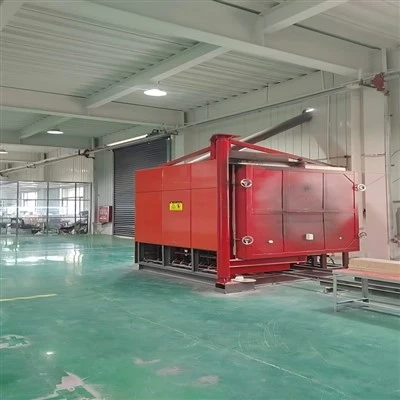
First off, the big showpiece: the shell. This is the long, slightly sloped steel tube that’s the heart of the whole unit, right? I’m talking 50 to 500 feet long, 8 to 20 feet in diameter—sometimes bigger for bulk materials like cement clinker. Why the slope? Simple: gravity. The shell tilts just 1 to 4 degrees from horizontal, so when it spins (usually 1 to 2 revolutions per minute, super slow), the raw material fed into one end gradually works its way toward the other. A lot of suppliers cut corners on shell steel, but I only use premium hot-rolled carbon steel, sometimes with alloy overlays if we’re processing super abrasive stuff like mining tailings. One time, a client went with a cheaper shell from another vendor, and it warped within two years from uneven heat—total nightmare for their production schedule. The shell’s thickness varies too: 1 to 1.5 inches in the cooler end, 2 to 3 inches in the hot zone, where extreme heat does the most damage. That’s where we load thicker steel to prevent hot spots and premature wear.
Next, the supporting system you don’t see at first glance: the trunnion rings and rollers. If the shell is the spinning tube, trunnion rollers are the heavy-duty casters holding the whole thing up. These aren’t your office chair wheels—each trunnion roller is usually a 12 to 24 inch diameter steel wheel, paired with a huge trunnion shaft that sits in a bearing housing. Trunnion rings (big circular steel bands welded to the shell) sit right on top of the rollers, so the entire kiln’s weight—sometimes hundreds of tons—rests on these four or six roller sets. Why so many? To distribute weight evenly, especially for large kilns. I always spec self-aligning bearings here because when the shell spins, it can shift a tiny bit, and self-aligning parts prevent stress cracks. I’ve seen cheap, rigid bearings seize up mid-shift before—total shutdown, costing a plant thousands an hour. Also, we add thrust rollers to keep the shell from sliding forward or backward on the trunnions; that’s a small part that prevents big, expensive misalignment issues later.
Then, the driving gear that makes the whole thing turn: the girth gear and pinion. Without this, the shell would just sit there, and nothing would move. The pinion is a small, high-torque gear connected to a heavy-duty electric motor or gearbox, and it meshes with the girth gear—a huge circular gear bolted to the trunnion ring (or sometimes directly to the shell, depending on the design). Spinning the pinion pulls the girth gear, and the whole kiln rolls. For most standard kilns, we use a variable-speed drive here—clients love this because they can adjust the rotation rate to match their raw material and process. For example, if you’re drying wet limestone, you spin a little faster to move material through the heat zone quicker; if you’re calcining alumina, you slow it way down to let the chemical reaction finish right. Pro tip from experience: don’t skimp on the girth gear. We use forged steel, not cast, because cast gears can crack under the constant heavy load. I once had a client who replaced a forged girth gear with a cast one to save $5k, and it shattered after 18 months—cost him $20k in repairs and 3 days of downtime.
Now, the parts that handle heat and feed: the refractory lining and internal internals. The shell’s inside is coated in refractory brick (or monolithic refractory, a concrete-like material) to protect the steel from the kiln’s heat, which can hit 2,500°F or higher. That’s non-negotiable—without refractory, the shell would melt or warp within weeks. The type of refractory depends on what you’re processing: high-alumina brick for cement, dolomite for lime, silicon carbide for extreme heat in metals refining. But here’s the stuff no one talks about: internal internals, the lifters and flights. These are metal pieces welded to the shell’s inner wall that lift raw material up as the kiln spins, then drop it back down in a curtain—super important for heat transfer. For drying raw materials, we use louvred flights that let air pass through while lifting material; for calcining, we use stepped flights that keep material moving and exposed to hot gases. A lot of cheap suppliers skip custom internals, but matching the flight design to the process makes your kiln 15-20% more efficient. I learned that the hard way on a 2019 lime kiln install: we used generic flights, and their drying time was way too slow. We swapped in custom stepped flights, and their throughput jumped right up.
Then, the inlet and outlet systems that move material and gases: the head and hoods. At the feed end (the upper end of the slope, where raw material goes in), you have a stationary feed hood—this is where you load in your raw material, and sometimes pre-heat it with exhaust gases from the hot end. On the discharge end (the lower end, where finished product comes out), there’s the discharge hood, plus the exhaust stack. The discharge hood has to handle two things: the solid finished product falling out, and the super hot exhaust gases going to the baghouse or scrubber for emissions control. We always add a seal here—either a graphite or steel skirt seal—to prevent cold air from leaking in, which would mess up the heat balance. Too much cold air means you need to burn more fuel, which eats into profits. I’ve seen clients skip good seals, and their fuel costs went up 10% within six months—easy fix, bad call.
Wait, let’s not forget the auxiliary systems that keep the kiln running smooth, because no kiln is a solo act. There’s the riding ring (also called a tire) — that’s the same as the trunnion ring I mentioned earlier, just sometimes used to refer to the heavy rings that support the shell’s weight. Then there’s the lubrication system for all the bearings and gears—automatic grease pumps, because you can’t manually grease a 100-ton spinning kiln every day. And last, the induction cooling system for the hot discharge end, because you need to cool the finished clinker or mineral before it’s stored or processed further.
So putting it all together, a rotary kiln isn’t just a big metal tube. It’s a system of carefully matched parts: the shell that holds the process, trunnions and rollers that support it, gears that drive it, linings and internals that control heat and material flow, and hoods that manage feeds and exhaust. Every single part matters, because cutting corners on one leads to big problems down the line.
If you’re in the market for a new rotary kiln, or you’re looking to upgrade your existing one, you don’t have to go through the headache of figuring out parts on your own. We’ve installed hundreds of kilns across mining, cement, and chemical processing, and we know exactly what works for different materials and throughputs. Reach out to us for a custom quote, a maintenance check, or even just answers to questions you’ve been too busy to ask—we’re here to help you keep your operation running.
Mobile Energy Saving Rotary Kiln References
- Perry, R. H., & Green, D. W. (1997). Perry’s Chemical Engineers’ Handbook, 7th Edition. McGraw-Hill Education.
- Smith, R. (2005). Chemical Process Design and Integration. John Wiley & Sons.
- Cement Manufacturing Association. (2021). Rotary Kiln Operations and Maintenance Guidelines. National Association of Manufacturers.
- Mining, Metallurgy & Exploration. (2019). Rotary Kiln Design for Mineral Processing. Society for Mining, Metallurgy & Exploration.
Henan Yaxin Kiln Co., Ltd.
Henan Yaxin Kiln Co., Ltd. is one of the most professional rotary kiln manufacturers and suppliers in China. With abundant experience, we warmly welcome you to buy high quality rotary kiln with the latest design from our factory. Good service and punctual delivery are available.
Address: Jixian Industrial Zone, Shangqiu City, Henan Province
E-mail: 1543563178@qq.com
WebSite: https://www.hnyxkiln.com/
