If you’ve ever walked past an industrial facility—say, a power plant, a large manufacturing plant, or even a data center on a hot summer day—and noticed a massive, rhythmic hum mixed with the whistle of moving air, chances are you’re hearing the fan of a closed circuit cooling tower. As someone who’s spent the last 12 years supplying closed circuit cooling towers to facilities across North America, I’ve lost count of how many times clients have asked me the same question: “Why does this fan matter so much? Couldn’t we just skip it and save money?” The short answer? No—because the fan isn’t just a random add-on to our cooling towers; it’s the core component that turns a piece of metal into a system that actually does the job it’s designed for: keeping critical equipment from overheating. Let me break this down in plain, practical terms, no overly technical jargon—just the lessons I’ve learned working with clients to optimize their cooling systems over thousands of installations. Closed Circuit Cooling Tower
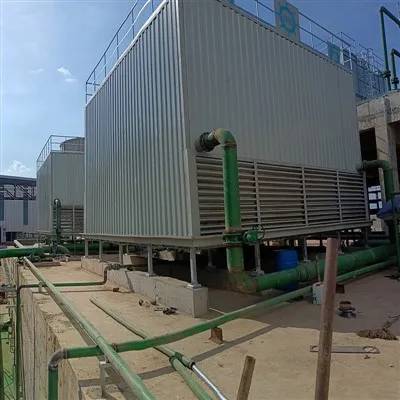
First, let’s start with what a closed circuit cooling tower actually does, because if you don’t grasp the base function, the fan’s role won’t make sense. Unlike an open cooling tower that exposes process water directly to the outside air, a closed circuit (often called an “evaporative condenser” or “fluid cooler” by some in the industry) keeps process fluid completely sealed in a coil or tube bundle. This is huge for clients because it means the process water or refrigerant never mixes with the ambient air, cutting down on corrosion, sediment buildup, and water treatment costs drastically. But here’s the catch: even with the process fluid sealed inside, you still need to remove the heat that’s built up in those tubes. That’s where two separate cooling loops come into play. The first loop is the closed, internal one: hot process fluid flows through the copper or steel tubes of the tower, transferring its heat to a thin layer of water that sits on the outside of those tubes. That outer layer of water is part of the second, open loop, which is exposed to the atmosphere. The fan’s job is to move that atmospheric air over the wetted outer surface of the tubes to pull heat out of that layer of water. Simple in theory, but it’s a balance that makes or breaks the tower’s efficiency.
Now, let’s get into the fan’s specific functions, starting with the most obvious one: moving air to drive evaporative cooling. When that thin layer of outer water hits the warm air, a small amount of it evaporates—evaporation is a phase change that requires energy, which it pulls from the remaining water and the tube walls, carrying the heat away with it. That’s the basic science of cooling, but evaporation only happens at a useful rate if there’s airflow. If you don’t have a fan, air around the tower’s wetted tubes will quickly become saturated with water vapor, so no more evaporation can happen. Think of hanging a wet towel on a still, humid day versus a windy, dry day: the wind speeds up the evaporation, so the towel dries faster. That’s exactly what the fan does, but on a scaled, industrial level. For our clients, that means a properly sized fan doesn’t just cool the water—it sets the cooling capacity of the entire tower. I had a client last year who tried to save money by undersizing the fan on a 500-ton tower they ordered from a cut-rate supplier. By the time they installed it, they realized the tower could only hit 350 tons of cooling on 90°F summer days, so their machinery was running hot and tripping safety shutdowns. They had to pay us to retrofit a larger fan, costing them three times the initial “savings” they thought they’d gotten. That’s the kind of real-world mistake that makes me emphasize fan sizing to every new client.
Next, the fan controls the heat transfer rate by adjusting airflow speed. Modern fans on our closed circuit cooling towers aren’t just on/off switches—we outfit most of our units with variable frequency drives (VFDs) that let operators tweak fan speed based on ambient conditions and cooling demand. Let’s say it’s a mild spring day: the process fluid isn’t as hot, so the fan can run at 50% speed, cutting energy use by half while still keeping the tower at full output. On a sweltering August afternoon, the fan cranks up to full speed to push as much air as possible, even pulling in a small amount of makeup air to counteract humidity. This is critical for energy efficiency, which is one of the biggest pain points for facility managers—power costs make up 30-40% of a cooling tower’s total lifetime operating cost. I work with food processing plants all the time, whose production lines run 24/7, so adjusting fan speed to match load not only saves them money but also extends the life of the tower’s components because it doesn’t run at maximum capacity nonstop.
Another function I don’t think clients talk about enough: preventing dust and debris buildup in the closed loop. Wait, how does a fan relate to that? Let’s go back to how air moves through the tower. A properly designed fan creates consistent, laminar airflow across the wetted tube bundle, which pushes small airborne particles—dust, pollen, even small insects—through the air stream and away from the tower’s water distribution system. If airflow is chaotic (like if the fan is old, unbalanced, or undersized), debris will get caught in the tower’s water spray nozzles or coat the outside of the tubes. That buildup acts as an insulator, blocking heat transfer and forcing the tower to work harder. We’ve had clients come to us with tower tubes that are 90% coated in mineral scale or cottonwood pollen from the local trees; the fan’s weak airflow had let that debris stick. Once we cleaned the tubes and balanced the fan, their cooling efficiency jumped 18% overnight. It’s a subtle function, but it ties directly to long-term performance.
Let’s also address a common myth I hear: “The fan is just for evaporative cooling. What if we run our tower in dry mode during cool weather?” A lot of closed circuit cooling towers can switch to adiabatic or dry mode, where no water is used for cooling, and the fan just blows air over the process tubes to carry heat away. In places like the Pacific Northwest, where temperatures hover around 60°F for months, some clients run their towers this way to save water. Guess what? The fan is still critical here. Without that airflow, the process fluid can only passively radiate heat to the surrounding air, which is super slow. In dry mode, the fan’s job is to increase the convective heat transfer rate, moving warm air away from the tube surfaces and pulling in cooler ambient air. Last year, a brewery in Portland used our closed circuit towers in dry mode during the rainy winter months, cutting their water use by 65% compared to open towers. They told us they never would have hit that number if the fan was too small to move enough air for dry cooling.
Now, let’s talk about what happens if the fan doesn’t do its job right—because the consequences aren’t just “less cooling.” For process equipment, overheating isn’t just an inconvenience; it can lead to costly downtime. A data center I worked with in Dallas had a fan failure a few years back during a heatwave. The 1000-ton tower’s fan seized up, so airflow stopped immediately. The process fluid temperature spiked from 85°F to 110°F in 20 minutes, and the data center had to shut down one of its server banks to prevent hardware damage. That downtime cost them an estimated $250,000 in lost revenue in just four hours. On the flip side, a well-maintained, properly sized fan extends the entire cooling tower’s lifespan. At our company, we design fans to be corrosion-resistant (we use galvanized steel or powder-coated aluminum, depending on the environment) and balance them during manufacturing, so they don’t cause vibration that can loosen tower components over time. A few years back, we had a client who skipped annual fan balancing and ended up with a cracked tower frame—costing them $15,000 in repairs. Preventive maintenance on the fan (checking belt tension, cleaning blades, calibrating VFDs) is way cheaper than reactive repairs.
I want to make this personal, because I’m not just selling a part or a machine—my team and I work with clients to tailor every cooling tower to their specific needs. When a client in Arizona, where summer humidity is low and temperatures hit 115°F, needs a closed circuit tower, we size the fan for maximum airflow, even adding an extra fan sometimes, to offset the low humidity’s impact on evaporation. For a client in Florida, where humidity is high year-round, we use fans with higher static pressure to push air through the dense, humid air, because humid air is thicker and harder to move. It’s not one-size-fits-all, and the fan is the part that we adjust most to meet those site-specific conditions. I once had a client in a pharmaceutical plant that required zero cross-contamination between process air and the facility’s cleanroom. We worked with them to design a fan that draws air only from the roof (filtered air, not ambient air near the ground where dust and fumes collect) and pushes it through the tower in a closed air loop, so there’s no risk of debris getting into the process. That’s the kind of specialized work that comes from understanding exactly what the fan contributes, not just its basic function.
If you’re a facility manager reading this, you might be focused on upfront costs, or maybe you’ve never paid much attention to the cooling tower’s fan beyond checking if it’s running. But I’ll tell you from 12 years in this industry: investing in a properly designed, well-built fan for your closed circuit cooling tower is one of the best operational decisions you can make. It drives efficiency, cuts energy and water costs, prevents costly downtime, and extends the life of your entire cooling system. The last thing you want is to be the client who cuts corners on the fan and ends up paying for it with lost production or skyrocketing utility bills.

If you’re looking to upgrade your existing closed circuit cooling tower, or you need a new system tailored to your facility’s needs, my team can walk you through every part—especially the fan selection, sizing, and maintenance. We don’t just sell equipment; we provide ongoing support to make sure your cooling system works as hard as your business does, year-round. Whether you’re in manufacturing, data centers, pharmaceuticals, food and beverage, or any industry that relies on reliable cooling, let’s connect to discuss how a properly matched fan can optimize your system’s performance and lower your long-term costs.
Closed Circuit Cooling Tower References:
- ASHRAE Handbook—HVAC Systems and Equipment, American Society of Heating, Refrigerating and Air-Conditioning Engineers, 2020.
- Closed Circuit Cooling Tower Design and Application Guidelines, Cooling Technology Institute, 2018.
- Industrial Fan Selection and Maintenance Best Practices, Air Movement and Control Association International, 2021.
- Evaporative Cooling Fundamentals, International Energy Agency Heat Pump and Thermal Energy Storage Programme, 2019.
Hainan Haizhou Fluid Technology Co., Ltd.
As one of the most experienced closed circuit cooling tower manufacturers and suppliers in China, we also support customized service. Please feel free to wholesale bulk high quality closed circuit cooling tower in stock here from our factory. Contact us for more details.
Address: Room 3003A-877, 30th Floor, Tower A, Internet Finance Building, No. 3 Guoxing Avenue, Lantian Subdistrict, Meilan District, Haikou City, Hainan Province
E-mail: FD@jxark.com
WebSite: https://www.hnhzark.com/
