If you’ve ever worked in a factory, a refinery, a water treatment plant, or any industrial setting where processes rely on precise measurement, you’ve probably encountered an industrial pressure transmitter. These devices are the unsung heroes of industrial operations, turning pressure readings into data that keeps systems running safely, efficiently, and compliant. As someone who’s spent over a decade supplying industrial pressure transmitters to facilities across North America, one question pops up more often than any other: “What’s the maximum pressure a transmitter can handle?” Industry Pressure Transmitter
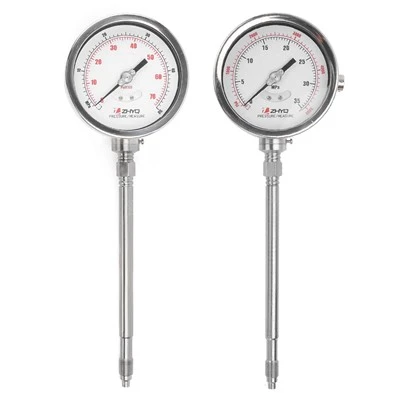
It’s not a simple answer, and it’s one that makes a lot of sense to ask too. Push a transmitter beyond its limit, and you don’t just damage a piece of equipment—you risk downtime, safety hazards, and lost production. Let’s break this down the way I explain it to customers every day, from the basics to the fine print that matters most.
First, let’s start with the two key pressure ratings that define what a transmitter can handle: working pressure and burst pressure. A lot of people mix these up, and that’s where mistakes happen. Working pressure is the maximum pressure a transmitter is designed to operate continuously, day in and day out, without affecting accuracy or lifespan. Burst pressure is the absolute maximum pressure the device can withstand before it fails catastrophically. These numbers aren’t made up—they’re tested under strict conditions, but that doesn’t mean you should ever run a transmitter close to its burst pressure.
Most standard industrial pressure transmitters I supply have a working pressure range from 15 PSI (pounds per square inch) for low-pressure applications up to 20,000 PSI for heavy hydraulic or petrochemical use. Wait, that’s a big gap, and it’s intentional. A pressure transmitter meant to measure the pressure in a municipal water line isn’t the same as one that monitors a high-pressure hydraulic pump in a mining operation. For reference, 20,000 PSI is roughly 1,360 times atmospheric pressure at sea level—enough to cut through thick metal, so you can see why a transmitter built for that needs to be robust.
Let me give a real example. Last year, a customer in a food processing plant came to me because their transmitters kept failing on a pasteurization line. They were using a general-purpose transmitter rated for 300 PSI working pressure, but the line would spike to 450 PSI during a valve flush. Over three months, they went through seven transmitters. When I looked at their setup, the problem was they were using a device designed for continuous operation at 300 PSI under pressure spikes they didn’t account for. The fix? We swapped them for transmitters with a 600 PSI working pressure rating, and those have been running for 18 months without an issue. That’s why matching the transmitter’s pressure rating to your process—including spikes—is non-negotiable.
Now, how do manufacturers determine these ratings? It’s not just building a tough box and testing it. The core of a pressure transmitter is the sensor, usually a diaphragm made of stainless steel, sometimes with a thicker alloy like Hastelloy for corrosive fluids. That diaphragm has to flex with pressure, converting movement into an electrical signal that the transmitter reads. The working pressure is set based on how much the diaphragm can flex without fatigue. Flex it beyond the design limit thousands of times, and it will wear out prematurely—leading to inaccurate readings or complete failure.
Burst pressure, on the other hand, is a much higher number, usually 3 to 5 times the working pressure for standard transmitters. So a transmitter with a 600 PSI working pressure will typically have a burst pressure of 1,800 to 3,000 PSI. But here’s the catch: burst pressure is a failure point, not a operational threshold. If you ever reach burst pressure, you’re looking at a broken transmitter, maybe a ruptured seal, and possibly a leak of whatever fluid you’re processing. For that reason, I always advise customers to add a 20% safety margin to their expected maximum pressure. If your process peaks at 500 PSI, don’t buy a transmitter rated for 500 PSI—go for 600 PSI working pressure. That small extra buffer avoids the kind of stress that shortens a transmitter’s life.
There are also specialty transmitters for ultra-high-pressure applications, way above 20,000 PSI. Think oil and gas well drilling, where pressures can hit 100,000 PSI or more, or aerospace testing facilities. Those transmitters use different materials—some have diamond-coated diaphragms—and specialized sealing to handle extreme conditions. I’ve worked with a small number of customers in the geothermal industry who needed transmitters that can handle high pressure plus high temperature, and those models are a separate line of products, not the standard units I keep in stock for general industrial use.
Another factor that affects maximum pressure handling: the type of pressure measurement. There’s gauge pressure, which measures pressure relative to atmospheric pressure, absolute pressure, which measures relative to a perfect vacuum, and differential pressure, which measures the difference between two points. For differential pressure transmitters, the maximum pressure is the sum of the two pressures you’re measuring. If you have a differential pressure transmitter with a maximum working pressure of 1,000 PSI, that means each side can’t exceed 500 PSI, or the total would hit 1,000 PSI. I see this mistake too: customers will set one side of a differential transmitter to 800 PSI and the other to 200 PSI, thinking the differential is 600 PSI, but they’re over the total pressure limit and damaging the sensor.
What about environmental factors? Pressure handling isn’t just about the pressure number itself. Temperature plays a big role. A transmitter that works at 600 PSI in a 70°F factory might only handle 400 PSI if it’s in a 200°F furnace application. High temperatures soften the metal components, reducing their pressure capacity. Corrosion does the same thing: if the fluid being monitored eats away at the diaphragm, the working pressure drops over time. That’s why choosing a transmitter with a wetted part (the parts that touch the fluid) made of a compatible material is just as important as the pressure rating. A stainless steel transmitter is great for water, but if you’re dealing with acid or salt brine, you might need Hastelloy or Monel. I always ask customers to send me their process fluid specs before recommending a transmitter, because using the wrong material is a fast way to turn a 600 PSI transmitter into a 200 PSI one.
I’ve also had customers ask if they can use a pressure gauge instead of a transmitter for high-pressure applications. Gauges are cheaper, sure, but they don’t output a signal for remote monitoring or control. If you need to log pressure data, trigger alarms when pressure gets too high, or automate a valve, a transmitter is non-negotiable. And those transmitters are built to handle pressure spikes that would break a gauge. For example, a gauge rated for 10,000 PSI will fail if there’s a 15,000 PSI spike, but a transmitter designed for 10,000 PSI working pressure can often handle that spike without damage, because the sensor is engineered to absorb short-term pressure surges.
Let’s talk about what happens when a transmitter is overpressurized. A small overpressure—say, 10% above the working pressure for a few seconds—usually won’t cause permanent damage. The diaphragm flexes a bit more than usual, but it springs back. But repeated small overpressures, or a single large overpressure (more than 20% above working pressure), will cause drift. That means the transmitter’s readings become inaccurate, even if it still works. I’ve had customers tell me their transmitter was “broken” but still worked, just gave a reading that was off by 10 PSI. Most of the time, that’s drift from overpressure, not a total failure. The fix? Calibrate the transmitter, but if the drift is too bad, replace it.
So what should you look for when choosing a transmitter’s maximum pressure rating? Let me sum this up the way I walk through with every new customer:
- Know your process: What’s the normal operating pressure, and what’s the maximum pressure your system ever reaches, even during valve flushes, startup, or faults? Write these numbers down—guessing is where mistakes happen.
- Add a safety margin: 20% is standard, but for high-vibration or high-cycling processes, add 30% to be safe. If your process peaks at 500 PSI, aim for a 600–650 PSI working pressure transmitter.
- Match materials: Make sure the wetted parts are compatible with your process fluid. A transmitter’s pressure rating is useless if corrosion eats through the diaphragm in six months.
- Check environmental ratings: Temperature, vibration, and humidity affect pressure handling. A transmitter for a controlled factory environment won’t last in an outdoor mining site in extreme weather.
If you’re not sure what you need, that’s okay. I’ve been supplying industrial transmitters for 12 years, and I’ve helped thousands of customers pick the right model for their application. Whether you’re dealing with low-pressure water lines, high-pressure hydraulic systems, or something in between, I can walk you through the specs, explain the difference between working and burst pressure, and help you avoid the costly mistake of underrating your transmitter.
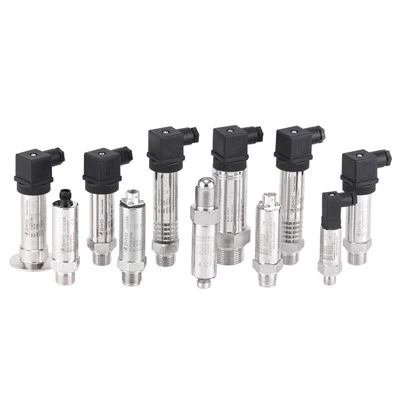
Don’t let a bad transmitter ruin your next production run. If you’re in the market for industrial pressure transmitters and want to make sure you get the right maximum pressure rating for your process, reach out to discuss your requirements. We can work together to find a solution that’s reliable, fits your budget, and keeps your operations running smoothly.
Capillary Melt Pressue Transmitter References:
- “Pressure Transmitter Design and Testing Standards,” International Electrotechnical Commission (IEC) Standard 61298-2, 2018.
- “Industrial Pressure Measurement: Selection, Application, and Maintenance,” ISA (International Society of Automation) Practice Guide, 2021.
- “Materials for Pressure Sensor Diaphragms: Compatibility and Performance,” NACE International Standard RP0775, 2019.
- “High-Pressure Transmitters for Industrial Process Control,” Journal of Process Measurement and Control, Vol. 32, No. 4, 2020, pp. 112–118.
Shanghai Zhaohui Pressure Apparatus Co., Ltd.
Shanghai Zhaohui Pressure Apparatus Co., Ltd. is one of the most professional industry pressure transmitter manufacturers and suppliers in China, featured by quality products and good service. Please rest assured to wholesale advanced industry pressure transmitter in stock here from our factory. Also, customized service and 1 year warranty are available.
Address: 2-6/F, Building 8, No.115, Lane 1276, Nanle Road, Shanghai, China
E-mail: sensorsales@zhyqsensor.com
WebSite: https://www.sinosensor.net/
