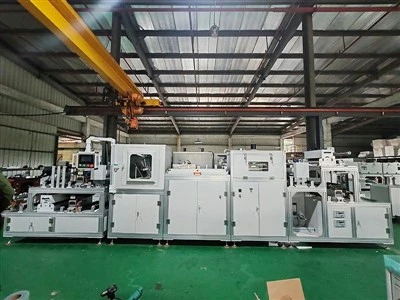
Automation equipment has revolutionized various industries, and the stationery industry is no exception. As a leading provider of automation equipment, I have witnessed firsthand how these advanced technologies are transforming the way stationery products are manufactured, distributed, and even sold. In this blog post, I will explore the diverse application scenarios of automation equipment in the stationery industry and highlight the benefits they bring. Automation Equipment
Manufacturing Processes
One of the most significant applications of automation equipment in the stationery industry is in the manufacturing processes. Automation can streamline production lines, increase efficiency, and improve product quality. For example, automated cutting machines can precisely cut paper, cardboard, and other materials to the desired size and shape, reducing waste and ensuring consistency. These machines can operate at high speeds, significantly increasing production output compared to manual cutting methods.
Automated printing machines are another essential component of stationery manufacturing. They can print high-quality images, text, and patterns on various stationery items, such as notebooks, greeting cards, and envelopes. These machines offer greater flexibility in terms of print volume, colors, and designs, allowing manufacturers to meet the diverse needs of their customers. Additionally, automated printing machines can reduce the time and labor required for printing, leading to cost savings.
Assembly processes in the stationery industry can also be automated. Robotic arms can be programmed to assemble different parts of a stationery product, such as attaching pen caps, inserting refill cartridges, or gluing pages together. This not only speeds up the assembly process but also improves the accuracy and consistency of the final product. Automated assembly systems can also perform quality control checks during the assembly process, ensuring that only products that meet the required standards are sent to the market.
Inventory Management
Automation equipment plays a crucial role in inventory management in the stationery industry. Automated inventory systems can track the quantity, location, and movement of stationery products in real-time. These systems use barcode scanners, RFID tags, and other technologies to collect data on inventory levels. This data can be used to generate reports, forecast demand, and optimize inventory levels.
For example, an automated inventory system can alert managers when stock levels of a particular stationery item are low, allowing them to place orders in a timely manner. This helps to prevent stockouts and ensure that customers can always find the products they need. Additionally, automated inventory systems can reduce the time and labor required for manual inventory counts, improving efficiency and accuracy.
Automated storage and retrieval systems (AS/RS) are also widely used in the stationery industry. These systems can store and retrieve stationery products in a highly efficient and organized manner. AS/RS use automated cranes, conveyors, and other equipment to move products in and out of storage locations. This not only saves space but also reduces the time and labor required for manual storage and retrieval operations.
Packaging and Labeling
Automation equipment is also used in the packaging and labeling of stationery products. Automated packaging machines can wrap, box, and seal stationery items quickly and efficiently. These machines can handle a variety of packaging materials, such as plastic, paper, and cardboard, and can be customized to meet the specific packaging requirements of different stationery products.
Automated labeling machines can print and apply labels to stationery products with high precision. These machines can print barcodes, product information, and other labels in a variety of sizes and formats. Automated labeling systems can also be integrated with inventory management systems, allowing for accurate tracking of products throughout the supply chain.
Retail and E-commerce
In the retail and e-commerce sectors of the stationery industry, automation equipment is used to improve the customer experience and increase operational efficiency. For example, self-checkout kiosks are becoming increasingly popular in stationery stores. These kiosks allow customers to scan and pay for their purchases without the need for a cashier, reducing waiting times and improving the overall shopping experience.
Automated sorting and fulfillment systems are also used in e-commerce warehouses. These systems can sort and pack stationery orders quickly and accurately, ensuring that customers receive their products in a timely manner. Automated sorting systems use conveyor belts, robotic arms, and other equipment to move products from storage to the packing area. This not only speeds up the fulfillment process but also reduces the risk of errors.
Benefits of Automation Equipment in the Stationery Industry
The use of automation equipment in the stationery industry offers several benefits. Firstly, it increases productivity. By automating repetitive and time-consuming tasks, manufacturers can produce more stationery products in less time. This allows them to meet the growing demand for stationery products and gain a competitive edge in the market.
Secondly, automation equipment improves product quality. Automated machines can perform tasks with greater precision and consistency than manual labor, resulting in higher-quality stationery products. This helps to build customer trust and loyalty, leading to increased sales and revenue.
Thirdly, automation reduces labor costs. By replacing manual labor with automated equipment, manufacturers can reduce the number of employees required for production, inventory management, and other operations. This not only saves on labor costs but also reduces the risk of human error.
Finally, automation equipment enhances safety in the workplace. Automated machines can perform dangerous tasks, such as cutting and printing, without the need for human intervention. This reduces the risk of accidents and injuries, creating a safer working environment for employees.
Conclusion
Automation equipment has a wide range of application scenarios in the stationery industry, from manufacturing and inventory management to packaging and retail. The benefits of using automation equipment, such as increased productivity, improved product quality, reduced labor costs, and enhanced safety, make it an essential investment for stationery manufacturers and retailers.
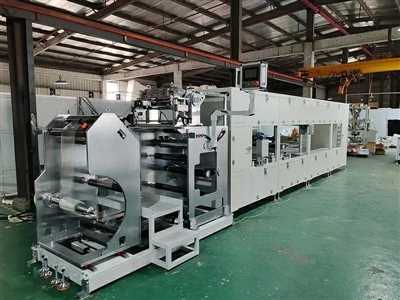
If you are in the stationery industry and are looking to improve your operations, I encourage you to consider implementing automation equipment. Our company offers a wide range of automation solutions tailored to the specific needs of the stationery industry. We have a team of experienced professionals who can help you select the right equipment and provide installation, training, and support services.
Laboratory Equipment Contact us today to learn more about how our automation equipment can transform your stationery business. We look forward to the opportunity to work with you and help you achieve your business goals.
References
- Smith, J. (2020). Automation in the Manufacturing Industry. Journal of Industrial Engineering, 35(2), 123-135.
- Johnson, R. (2019). The Impact of Automation on Inventory Management. Supply Chain Management Review, 22(4), 56-67.
- Brown, A. (2018). Automated Packaging and Labeling Solutions. Packaging Technology Journal, 15(3), 78-89.
Dongguan Innate Intelligent Technology Co., Ltd.
With abundant experience, we are one of the most professional automation equipment manufacturers in China. With a professional production team, we are able to meet the needs of the majority of our customers. Please feel free to buy advanced automation equipment made in China here from our factory. Customized orders are welcome.
Address: Room 201, Building 4, No. 92, Fenghuang Road, Dalingshan Town, Dongguan City, Guangdong Province
E-mail: 13316631159@163.com
WebSite: https://www.getinnater.com/
