Hey there! I’m a supplier of physical property testing equipment, and I’ve been in this business for quite a while. Over the years, I’ve seen firsthand how important these tools are in the chemical industry. So, let’s dive into what kind of physical property testing equipment is used in this industry. Physical Property Testing Equipment

1. Density Meters
Density is a fundamental physical property of chemicals. It can give us a lot of information about the composition and purity of a substance. In the chemical industry, density meters are super common.
There are different types of density meters. One of the most popular ones is the vibrating tube density meter. It works by measuring the change in the vibration frequency of a tube filled with the sample. This change is directly related to the density of the sample. It’s really accurate and can work with a wide range of substances, from light solvents to heavy oils.
Another type is the pycnometer. It’s a simple but effective device. You just fill it with a known volume of the chemical and weigh it. By comparing the weight of the filled pycnometer with the weight of the empty one, you can calculate the density. It’s great for more precise measurements, especially in research labs.
2. Viscosity Meters
Viscosity is all about how thick or thin a fluid is. In the chemical industry, knowing the viscosity of a substance is crucial. For example, in the production of paints, the viscosity affects how well the paint spreads and adheres to surfaces.
There are many kinds of viscosity meters. The rotational viscosity meter is widely used. It has a spindle that rotates in the sample fluid. The resistance the spindle experiences as it rotates is measured, and this gives us an idea of the fluid’s viscosity. It can be adjusted to different speeds and temperatures, which is really useful because viscosity can change with these factors.
Capillary viscometers are also popular. They work by measuring the time it takes for a fluid to flow through a narrow tube. The longer the flow time, the higher the viscosity. They’re relatively simple and can provide accurate results for Newtonian fluids (fluids whose viscosity doesn’t change with the rate of flow).
3. Refractometers
Refractometers measure the refractive index of a substance. The refractive index is a measure of how much light bends when it passes through a material. In the chemical industry, it can be used to determine the concentration of a solution.
For example, in the sugar industry, refractometers are used to measure the sugar content in a syrup. As the sugar concentration increases, the refractive index of the syrup also changes. By measuring the refractive index, we can quickly and easily find out how much sugar is in the solution.
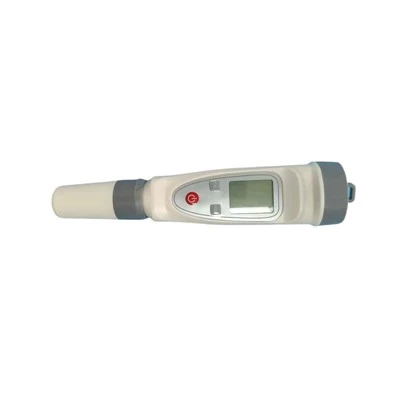
There are handheld refractometers, which are really portable and easy to use. They’re great for on – site measurements. And there are also more advanced laboratory refractometers that can provide very accurate and detailed measurements.
4. Thermal Analysis Equipment
Thermal analysis is all about studying how a substance changes with temperature. In the chemical industry, this can be used to understand a lot of things, like the melting point, boiling point, and thermal stability of a chemical.
Differential scanning calorimetry (DSC) is a very important thermal analysis technique. It measures the heat flow into or out of a sample as it’s heated or cooled. By looking at the peaks and valleys in the DSC curve, we can determine things like the melting point, crystallization point, and heat capacity of the sample.
Thermogravimetric analysis (TGA) is another useful technique. It measures the change in the mass of a sample as it’s heated. This can tell us about things like the decomposition temperature of a chemical and the amount of volatile components in it.
5. Moisture Analyzers
Moisture content can have a big impact on the properties and performance of chemicals. For example, too much moisture in a pharmaceutical powder can cause it to clump and affect its dissolution rate.
There are different types of moisture analyzers. The most common one is the halogen moisture analyzer. It works by heating the sample with a halogen lamp. As the sample is heated, the moisture evaporates, and the change in weight is measured. By comparing the initial weight and the final weight, we can calculate the moisture content.
Karl Fischer titration is a more precise method for measuring very low levels of moisture. It’s based on a chemical reaction between the moisture in the sample and a reagent. It’s widely used in industries where even a small amount of moisture can cause problems, like the electronics and battery industries.
6. Spectrophotometers
Spectrophotometers are used to measure the interaction between light and a chemical sample. They can be used to determine the concentration of a substance, as well as to identify the chemical structure.
UV – Vis spectrophotometers measure the absorption of ultraviolet and visible light by a sample. Different chemicals absorb light at different wavelengths, and by measuring the absorption spectrum, we can identify the chemical and determine its concentration.
Infrared (IR) spectrophotometers work in the infrared region of the electromagnetic spectrum. They can be used to identify functional groups in a chemical molecule. For example, the presence of a carbon – oxygen double bond can be detected by looking at the characteristic absorption peak in the IR spectrum.
Why Choose Our Equipment?
Now, you might be wondering why you should choose our physical property testing equipment. Well, first of all, our products are of high quality. We use the latest technology and high – grade materials to make sure our equipment is accurate and reliable.
We also offer excellent customer service. Our team of experts is always ready to help you with any questions or problems you might have. Whether it’s installation, calibration, or maintenance, we’ve got your back.
And our prices are competitive. We understand that cost is an important factor for businesses, so we try our best to offer the best value for your money.
Magnetic Stirrer If you’re in the chemical industry and need physical property testing equipment, or if you just want to learn more about our products, I’d love to hear from you. You can reach out to us to start a conversation about your specific needs. We can work together to find the right equipment for your business.
References
- ASTM International standards on physical property testing of chemicals.
- Textbooks on analytical chemistry and chemical engineering that cover physical property testing methods.
- Industry reports and research papers on the use of physical property testing equipment in the chemical industry.
Hangzhou Qiwei Instrument Co., Ltd.
Hangzhou Qiwei Instrument Co., Ltd. is one of the most reliable manufacturers and suppliers of physical property testing equipment in China, featured by quality products and good service. Please rest assured to buy bulk durable physical property testing equipment in stock here from our factory. We also accept customized orders.
Address: Room 101, Building 25, No. 488-1, Donghu North Road, Linping District, Hangzhou City, Zhejiang Province, China
E-mail: info@qiweilab.com
WebSite: https://www.qiweilab.com/
