If you’ve ever knelt down beside your car at a gas station, swapping out a dim parking light or a faulty dome lamp, you’ve almost certainly held a BA9S bulb in your hands. These small, pinch-style bulbs are everywhere—from turn signal indicators on older sedans to interior map lights and even some license plate lights on trucks, RVs, and compact cars. As someone who’s spent the last decade supplying BA9S bulbs to repair shops, auto parts stores, and fleet operators across North America, one question comes up more than any other: Are BA9S bulbs legal for use on public roads? The short answer isn’t a simple yes or no—and that ambiguity is where a lot of vehicle owners, and even some parts sellers, get tripped up. Today, I’m breaking down road regulations for BA9S bulbs, what actually matters for compliance, and why partnering with a trusted supplier matters when you’re replacing these tiny lights. BA9S Bulb
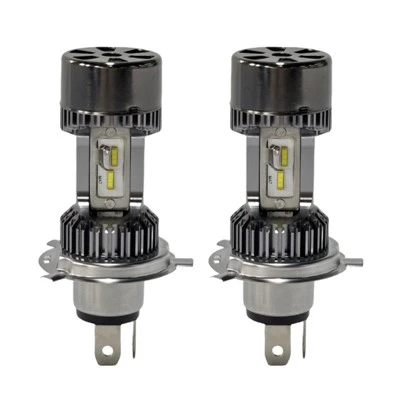
Let’s start with what a BA9S bulb actually is, because that core definition shapes every regulation that applies to it. BA9S refers to the bulb’s base style: it has a bayonet mount (that’s the “BA” part, short for bayonet) that measures 9 millimeters across, and a single contact pin at the bottom (“S” for single contact). They’re usually small, between 5 and 18 watts, and most use a tungsten filament, though LED BA9S bulbs have exploded in popularity over the last five years as drivers look for brighter, longer-lasting replacements. At their core, BA9S bulbs are signal and marker lights—not headlights or taillights, which have far stricter federal guidelines. That’s a key distinction right off the bat.
In the United States, road lighting regulations are set by two main bodies: the National Highway Traffic Safety Administration (NHTSA), which writes Federal Motor Vehicle Safety Standards (FMVSS), and state-level transportation agencies, which enforce those standards. For signal and marker lights, FMVSS Part 108 is the rulebook. That standard outlines everything from where each light has to be mounted on a vehicle, to its color, brightness, and how far it has to be visible from. Let’s get specific with BA9S bulbs here. FMVSS Part 108 doesn’t explicitly name BA9S as a part type, because that base designation is an industry standard for the mounting, not a government one—instead, it regulates the function and performance of the light the bulb produces. So a BA9S bulb used for a license plate light, for example, has to emit white or light-colored light that illuminates the plate clearly enough for a police officer to read it from 50 feet away, regardless of whether it’s incandescent or LED. A BA9S turn signal bulb, though, has to be amber (or red at the rear) and have a flash rate between 60 and 120 flashes per minute, per FMVSS rules.
The big gotcha here is that a lot of drivers assume “LED” automatically means compliant—and that’s not true. I see this every week: a customer orders cheap LED BA9S bulbs from a big-box online marketplace, installs them, and then gets pulled over because their local police officer noticed they’re too bright, or their color is off, or they don’t flash at the right speed. For example, some off-brand LED BA9S bulbs are so bright they can blind oncoming drivers when used as interior map lights, which isn’t allowed because interior lights on public roads can’t emit distracting glare. Others have a blue or purple tint instead of the required amber for front turn signals, which is a straightforward fix—cheap suppliers cut corners on the LED chips to keep costs low, and that’s where compliance fails.
It’s not just color and brightness, either. For license plate lights, FMVSS Part 108 says the light can’t be aimed directly at the license plate’s text or at a height that would make it visible to oncoming traffic from more than 50 feet away. Some BA9S bulbs are mounted in a way that causes glare, especially if you’re using an aftermarket socket that doesn’t align with the factory housing. That’s a problem both for safety and for compliance. I had a customer last month who installed LED BA9S license plate lights on his pickup truck and got a $150 ticket because the officer said they were “emitting excessive glare toward oncoming vehicles”—a ruling that’s actually backed by FMVSS guidelines, even if the officer didn’t know the exact number of the standard.
Now, what about other regions, because regulations aren’t universal. If you’re in Canada, the rules are almost identical to the U.S., set by Transport Canada’s Motor Vehicle Safety Standards. In the European Union, ECE Regulation 48 covers lighting and light-signaling equipment, and it specifically addresses BA9S bulbs as “bulbs for auxiliary lights.” ECE rules are stricter on color consistency, too: front turn signal BA9S bulbs must be a specific amber that meets ECE R50, no exceptions, and rear marker BA9S bulbs can’t be any shade of red that might be confused with taillights. I’ve had European clients reach out frustrated because cheap BA9S bulbs they bought online don’t meet ECE color requirements, and they have to return them. That’s why as a supplier, we make sure every BA9S bulb we carry meets both FMVSS and ECE standards, depending on the market it’s intended for.
Here’s another common myth: if a BA9S bulb is DOT-approved, it’s legal everywhere. DOT (U.S. Department of Transportation) approval is a certification that a part meets FMVSS standards, but it’s not a universal seal. A lot of counterfeit BA9S bulbs will slap a “DOT” sticker on the packaging even if they haven’t been tested, which is why it’s important to buy from a reputable source. We’ve had customers bring in a bag of cheap BA9S bulbs they bought at a gas station for $2 each, and when we test them in our lab, we find their brightness is 30% higher than FMVSS allows, or their flash rate is 150 flashes per minute—way too fast for turn signals. That’s not just a compliance issue; it’s a safety issue, too: a turn signal that flashes too fast makes it harder for other drivers to anticipate your next move.
So, what does this mean for you, whether you’re a DIY mechanic or a fleet manager replacing BA9S bulbs? First, always check your local state or provincial rules. Even within the U.S., some states have extra restrictions: for example, California’s DMV has specific guidelines for auxiliary lighting that are slightly stricter than FMVSS, and they’ve cracked down hard on non-compliant LED BA9S bulbs in recent years. Second, match the bulb to the original part’s function and housing. If your car came with an incandescent BA9S bulb for the license plate, don’t assume an LED BA9S bulb will work—make sure it’s rated for the same voltage, brightness, and color as the factory part. Third, buy from a supplier that tests their bulbs for compliance. As someone in this industry, I can tell you that 90% of the BA9S bulb issues we see come from bulbs that were never tested to meet official standards. We have our BA9S bulbs tested at a third-party lab every quarter to confirm they meet FMVSS and ECE requirements, and we provide documentation of that testing to any customer that asks.
Wait, let’s talk about the difference between vintage cars and modern vehicles, because that’s a whole other category of BA9S bulb use. A lot of classic car owners use BA9S bulbs for everything from taillights to interior lights, and they often run into issues with regulations because vintage vehicles weren’t built to modern standards. For example, a 1967 Mustang has BA9S taillight bulbs that are red, but many classic car owners upgrade to brighter LED BA9S bulbs, and some states require that vintage vehicles retain their original light color and brightness levels as a condition of registration. That’s a nuance a lot of suppliers miss—we offer two lines of BA9S bulbs: one for modern vehicles, tested to current FMVSS standards, and another for classic cars, designed to match the exact light output and color of original factory bulbs, so you don’t have to worry about failing a safety inspection.
I’ve been supplying BA9S bulbs for long enough to know that most people don’t set out to buy a non-compliant bulb. They just want a replacement that works, that’s bright enough, that doesn’t burn out every six months. The problem is that the auto parts market is flooded with cheap, untested bulbs that cut corners on compliance to keep prices low. I had a customer last year who owned a 2018 Honda Civic, and he swapped out his BA9S map light bulbs for LED ones from a big online retailer. A week later, he got pulled over at a roadblock because his map lights were so bright they were visible from outside the car at night, which is a moving violation in most states. He’d spent $5 on two bulbs, and ended up with a $250 ticket. That’s the kind of avoidable mistake that comes from not paying attention to compliance.
So, to circle back to the original question: Are BA9S bulbs subject to road regulations? Yes, but the regulations depend on where you’re driving, what function the bulb serves, and whether the bulb meets official performance standards. There’s no blanket “BA9S bulbs are legal” or “BA9S bulbs are illegal”—it’s all about matching the bulb to its intended use, making sure it meets regional safety standards, and avoiding untested, off-brand bulbs that cut corners.

If you’re replacing BA9S bulbs for your personal car, a fleet of work trucks, or a classic car you’re restoring, don’t take chances with cheap, untested parts. We specialize in high-quality, compliant BA9S bulbs for all applications, and we can help you confirm which type is right for your vehicle, whether you need incandescent replacements for vintage cars or LED bulbs that meet current FMVSS standards for modern vehicles. If you’re a repair shop or auto parts store looking for bulk pricing on compliant BA9S bulbs, we also offer custom bulk orders for businesses of all sizes. Reach out to our team today to discuss your specific needs, and we’ll make sure you get the right bulbs for your vehicle, compliant and ready for the road.
B22 Bulb References
National Highway Traffic Safety Administration. (2023). Federal Motor Vehicle Safety Standard No. 108: Lamps, Reflective Devices, and Associated Equipment. U.S. Department of Transportation.
Transport Canada. (2022). Motor Vehicle Safety Standards: Lighting and Signaling Systems. Government of Canada.
United Nations Economic Commission for Europe. (2021). ECE Regulation No. 48: Un provision concerning the Approval of Vehicles with Regard to Lighting and Light-Signalling Equipment.
California Department of Motor Vehicles. (2023). Auxiliary Lighting and Signal Equipment Guidelines. State of California.
National Automotive Parts Association. (2022). SAE Standard J575: Lighting Measurement and Performance.
BULBPLAN Co., Ltd.
As one of the most professional ba9s bulb manufacturers and suppliers in China, our products have good reputation in the market. Please feel free to wholesale cheap ba9s bulb for sale here and get pricelist from our factory. Quality products and reasonable price are available.
Address: No. 86 Zhongli Road, Nancheng Street, Dongguan City, Guangdong Province
E-mail: Alex@bulbplan.com
WebSite: https://www.nicebulbs.com/
