Hey there! I’m a supplier of wedge wire screen cylinders, and today I’m gonna walk you through how these nifty things are made. It’s a pretty interesting process, and I’m stoked to share it with you. Wedge Wire Screen Cylinder
Starting with the Basics: What is a Wedge Wire Screen Cylinder?
Before we jump into the manufacturing process, let’s quickly talk about what a wedge wire screen cylinder is. It’s a type of filter or screening device that’s used in a whole bunch of industries, like water treatment, mining, food processing, and more. The main idea is to separate solids from liquids or to filter out certain particles based on their size.
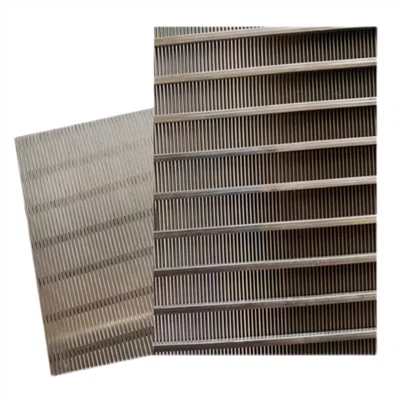
The wedge wire itself is a V-shaped wire that’s wrapped around support rods. This design gives the screen a high open area, which means it can let a lot of fluid pass through while still effectively catching the stuff you don’t want. And the cylinder shape makes it great for applications where you need to filter things in a circular or tubular setup.
Step 1: Material Selection
The first step in making a wedge wire screen cylinder is choosing the right materials. We usually use stainless steel because it’s strong, corrosion-resistant, and can handle a wide range of temperatures and chemicals. There are different grades of stainless steel, and we pick the one that’s best suited for the specific application.
For example, if the screen is going to be used in a harsh chemical environment, we’ll go for a higher-grade stainless steel that can withstand the corrosion. On the other hand, if it’s for a more general-purpose application like water filtration, a standard grade might be just fine.
We also need to select the right size and shape of the wedge wire and support rods. The size of the wire and the spacing between the rods will determine the size of the openings in the screen, which is crucial for the filtering performance.
Step 2: Wire Preparation
Once we’ve got the materials, it’s time to prepare the wires. The wedge wire needs to be cut to the right length and straightened out. We use special machines to do this, which can cut the wire accurately and make sure it’s nice and straight.
The support rods also need to be prepared. They’re usually cut to the length of the cylinder and then cleaned to remove any dirt or debris. Sometimes, we’ll also apply a coating to the support rods to improve their corrosion resistance.
Step 3: Welding the Screen
Now comes the fun part – welding the wedge wire to the support rods. We use a resistance welding process to join the two together. This involves passing an electric current through the wire and the rods, which heats them up and causes them to melt and fuse together.
The welding process is carefully controlled to make sure the joints are strong and the screen is uniform. We use automated welding machines that can precisely position the wire and the rods and apply the right amount of heat and pressure.
As the wire is wrapped around the support rods, we create a continuous helix of wedge wire. The spacing between the wires is determined by the design requirements of the screen. This spacing is what allows the fluid to pass through while trapping the solids.
Step 4: Forming the Cylinder
Once the screen is welded, it’s time to form it into a cylinder. We use a rolling machine to bend the flat screen into a circular shape. The machine applies pressure to the screen to gradually curve it until it forms a cylinder.
During the forming process, we need to make sure the cylinder is the right diameter and length. We also need to ensure that the edges of the screen are properly aligned and welded together to create a seamless cylinder.
Step 5: Finishing Touches
After the cylinder is formed, there are a few finishing touches to make. We might need to trim the edges of the cylinder to make it the right size and shape. We also clean the cylinder to remove any welding slag or other debris.
Sometimes, we’ll apply a surface treatment to the cylinder to improve its appearance and corrosion resistance. This could be a passivation treatment, which involves treating the stainless steel with a chemical solution to remove any free iron and create a protective oxide layer on the surface.
Step 6: Quality Control
Quality control is a crucial part of the manufacturing process. We have a team of quality control experts who inspect every wedge wire screen cylinder before it leaves our facility. They check the dimensions, the welding quality, the open area, and the overall performance of the screen.
We use a variety of testing methods to ensure that the screen meets the highest standards. For example, we might use a pressure test to check the integrity of the screen and make sure it can withstand the pressure of the fluid passing through it. We also use a particle size analysis to verify that the screen is filtering out the right size particles.
Why Choose Our Wedge Wire Screen Cylinders?
Now that you know how our wedge wire screen cylinders are made, you might be wondering why you should choose us as your supplier. Well, there are a few reasons.
First of all, we have a lot of experience in the industry. We’ve been making wedge wire screen cylinders for years, and we’ve developed a reputation for producing high-quality products. Our team of experts knows the ins and outs of the manufacturing process, and they’re constantly looking for ways to improve our products.
Second, we offer a wide range of customization options. We can make wedge wire screen cylinders in different sizes, shapes, and materials to meet your specific needs. Whether you need a small cylinder for a laboratory application or a large one for an industrial process, we can do it.
Third, we provide excellent customer service. We’re always here to answer your questions and help you find the right solution for your application. We’ll work with you from the initial design stage to the final installation to make sure you’re completely satisfied with our products.
Let’s Talk!

If you’re interested in purchasing wedge wire screen cylinders, I’d love to hear from you. Whether you have a specific project in mind or just want to learn more about our products, feel free to reach out. We can discuss your requirements, provide you with a quote, and answer any questions you might have.
Steel Grating So, don’t hesitate! Let’s start a conversation and see how we can help you with your screening needs.
References
- "Stainless Steel in Construction" – A technical guide on the properties and applications of stainless steel.
- "Industrial Filtration Handbook" – A comprehensive resource on filtration technology and equipment.
- "Welding Processes and Techniques" – A reference book on different welding methods and their applications.
Hebei Zhenou Wire Mesh Products Co., Ltd.
As one of the most professional wedge wire screen cylinder manufacturers and suppliers in China, we’re featured by quality products and good price. Please rest assured to buy discount wedge wire screen cylinder for sale here from our factory. Customized orders are welcome.
Address: Anping Economic Development Zone, Hengshui City, Hebei Province, China
E-mail: anna.zowm@gmail.com
WebSite: https://www.zowiremesh.com/
