In the industrial world, pipe conveyor belts play a crucial role in transporting various materials efficiently and safely. One of the most important features of a pipe conveyor belt is its anti – skid design. As a supplier of pipe conveyor belts, I’m eager to share in – depth knowledge about this essential design element. Pipe Conveyor Belt
The Concept of Anti – skid Design
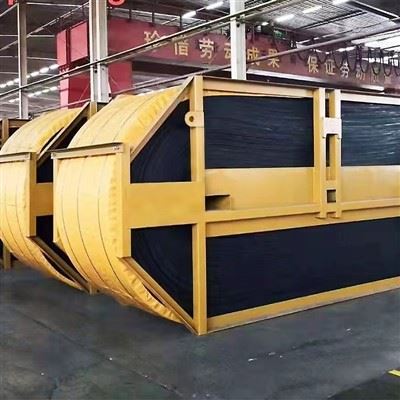
The anti – skid design refers to a set of features and mechanisms incorporated into the pipe conveyor belt to prevent slipping between the belt and the conveyor rollers or pulleys. In a pipe conveyor system, the belt forms a closed tube to enclose the material being transported. This unique configuration adds complexity to the operation, and any slippage can lead to a series of problems, such as reduced conveying efficiency, uneven material distribution, and potential damage to the belt and other components.
Why Anti – skid Design is Necessary
Ensuring Conveying Efficiency
Efficiency is a top priority in any industrial conveying process. When a pipe conveyor belt slips, it fails to move in sync with the drive system, which means the intended amount of material cannot be transported within a specified time frame. For example, in a mining operation where large quantities of ore need to be moved from the extraction site to the processing plant, even a small amount of slippage can accumulate over time, resulting in a significant reduction in overall production.
Protecting the Belt and Components
Slippage can cause excessive wear and tear on the belt surface. The friction generated by the slipping belt against the rollers can lead to abrasion, which weakens the belt structure and shortens its service life. Moreover, the abnormal movement caused by slippage may also put additional stress on other conveyor components, such as bearings and motors, increasing the risk of mechanical failures and costly repairs.
Maintaining Material Integrity
In a pipe conveyor system, the enclosed design is intended to ensure that the material being transported remains intact and is not spilled or contaminated. Slippage can disrupt the smooth flow of the material, causing it to bunch up or spill out of the pipe. This is particularly critical when transporting hazardous or delicate materials.
Key Components of Anti – skid Design
Surface Texture
The surface texture of the pipe conveyor belt is a fundamental aspect of anti – skid design. A rough surface provides more friction between the belt and the rollers or pulleys. There are several ways to achieve a suitable surface texture. One common method is to use a special rubber compound with a high coefficient of friction. The rubber can be formulated to have a micro – rough surface pattern, which increases the contact area and enhances the frictional force.
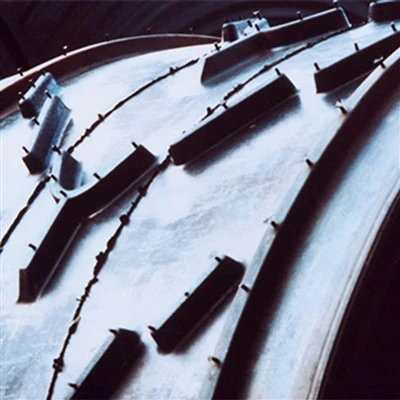
Another approach is to add a patterned layer on the belt surface. This can be in the form of ribs, grooves, or dots. Ribbed patterns, for example, can guide the flow of material and also improve the grip between the belt and the rollers. Grooved patterns can help channel away any moisture or debris that might otherwise reduce friction.
Belt Tensioning System
Proper belt tension is essential for preventing slippage. A well – designed belt tensioning system ensures that the belt is pulled tightly enough against the rollers to maintain sufficient frictional contact. There are different types of tensioning devices, such as gravity – based tensioners, screw – type tensioners, and hydraulic tensioners.
Gravity – based tensioners use the weight of a counterweight to apply tension to the belt. They are simple and reliable, but may require more space. Screw – type tensioners allow for manual adjustment of the belt tension by turning a screw mechanism. Hydraulic tensioners, on the other hand, can provide precise and automatic tension control, which is particularly useful in applications where the load on the conveyor varies.
Roller Design
The design of the conveyor rollers also contributes to the anti – skid performance. Rollers with a high – friction surface, such as a rubber – covered surface, can increase the grip on the belt. Additionally, the shape and arrangement of the rollers are important. For example, crowned rollers can help keep the belt centered and prevent lateral slippage. The spacing between the rollers also needs to be carefully determined to ensure uniform support for the belt and to minimize the risk of slippage.
Factors Affecting Anti – skid Performance
Material Properties
The properties of the material being transported can have a significant impact on the anti – skid performance of the pipe conveyor belt. Materials with high moisture content, such as wet coal or clay, can reduce the friction between the belt and the rollers. In such cases, special anti – skid measures may be required, such as using a hydrophobic rubber compound on the belt surface or installing additional cleaning devices to remove moisture.
Environmental Conditions
The operating environment also affects anti – skid performance. In a dusty environment, the accumulation of dust on the belt and rollers can act as a lubricant, reducing friction. In cold conditions, the rubber material of the belt may become more rigid, which can also affect its frictional properties. To address these issues, proper environmental controls, such as dust suppression systems in dusty areas and heating systems in cold environments, may be necessary.
Conveyor Speed and Load
The speed at which the conveyor operates and the load it carries can influence slippage. Higher speeds and heavier loads generally require greater frictional forces to prevent slippage. Therefore, in applications where high – speed or heavy – load conveying is required, a more robust anti – skid design, including a higher – friction belt surface and a more powerful tensioning system, may be needed.
Testing and Quality Assurance
As a pipe conveyor belt supplier, we understand the importance of ensuring the effectiveness of the anti – skid design. We conduct a series of tests during the manufacturing process to verify the anti – skid performance of our belts. These tests include measuring the coefficient of friction under different conditions, such as varying loads, speeds, and environmental factors.
We also perform endurance tests to simulate long – term operation and check for any signs of wear or slippage over time. Only after the belts have passed all these rigorous tests are they considered ready for the market. Our quality control procedures are in line with international standards, ensuring that our customers receive high – quality products that meet their specific requirements.
Real – world Applications
Pipe conveyor belts with effective anti – skid designs have been widely used in various industries. In the mining industry, they are used to transport coal, ore, and other minerals from the mines to processing facilities. The anti – skid design ensures that these heavy and often abrasive materials can be transported safely and efficiently over long distances.
In the cement industry, pipe conveyor belts are used to move raw materials and finished products. The enclosed design of the pipe conveyor prevents dust emissions, and the anti – skid design ensures smooth operation, even when dealing with fine – grained materials like cement powder.
Conclusion
The anti – skid design of a pipe conveyor belt is a complex and essential aspect of its performance. It involves a combination of surface texture, belt tensioning systems, roller design, and careful consideration of various factors such as material properties, environmental conditions, and conveyor speed and load. As a reliable supplier of pipe conveyor belts, we are committed to providing high – quality products with excellent anti – skid performance.
Low Rolling Resistant Conveyor Belt If you are in need of pipe conveyor belts for your industrial applications, we invite you to contact us for a detailed discussion. Our team of experts can help you select the most suitable conveyor belt based on your specific requirements and ensure that you get the best value for your investment.
References
- "Conveyor Belt Technology Handbook", Edited by a group of industry experts, published by a well – known industrial publisher.
- Research papers on pipe conveyor systems from international academic journals focusing on mechanical engineering and industrial transportation.
Alumina Technology (Qingdao) New Materials Co., Ltd.
As one of the most professional pipe conveyor belt manufacturers and suppliers in China, we also support customized service. With abundant experience, we warmly welcome you to buy pipe conveyor belt for sale here and get quotation from our factory. For price consultation, contact us.
Address: No.448, Jiangshan South Road, Huangdao District, Qingdao City, Shandong Province
E-mail: Gloria.zhang@contitech.cn
WebSite: https://www.altechconveyorbelt.com/
