Hey there! As a supplier of PET Preform Molds, I’ve seen firsthand how crucial good release properties are. If you’re struggling with getting your preforms out smoothly, you’re definitely in the right place. PET Preform Mold
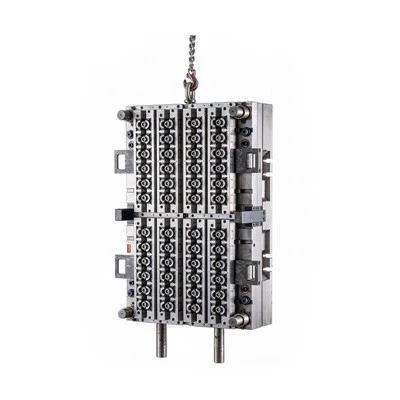
Let’s start off by understanding why release properties matter so much. In the world of PET preform molding, time is money. A mold that doesn’t release the preforms easily can lead to production delays. You end up spending extra time trying to get the preforms out, which means your overall production speed drops. And that’s not it. If you’re using too much force to release the preforms, you might damage them. Cracks, deformities – these are all things you want to avoid if you’re aiming for high – quality products.
So, what can we do to improve these release properties? Well, the first thing I’d like to talk about is mold surface treatment.
Mold Surface Treatment
One of the simplest yet most effective ways to improve release is by choosing the right surface finish for your mold. A smooth surface is generally better for release. When the mold surface is rough, the preform tends to stick to it. We can use processes like polishing to make the surface as smooth as possible. There are different levels of polishing, and for PET preform molds, a high – grade polish can make a huge difference.
Another option is applying a coating to the mold surface. There are various types of coatings available, each with its own advantages. For example, a PTFE (Polytetrafluoroethylene) coating is well – known for its non – stick properties. It creates a slippery surface that allows the preform to slide out easily. Ceramic coatings are also a good choice. They’re hard, wear – resistant, and can improve release. Plus, they can protect the mold from corrosion and other forms of damage.
But here’s the thing – applying a coating isn’t a one – size – fits – all solution. You need to consider the type of PET resin you’re using, the molding conditions, and the overall design of the preform. For instance, if you’re using a high – viscosity PET resin, you might need a more robust coating to ensure good release.
Mold Design
The design of the mold itself plays a big role in release properties. First, let’s talk about draft angles. Draft angles are the slight taper on the walls of the mold cavity. They allow the preform to be ejected more easily. If the draft angles are too small or non – existent, the preform will get stuck in the mold. As a general rule, you should aim for a draft angle of at least 1 – 2 degrees, but this can vary depending on the shape and size of the preform.
The gate design is also crucial. The gate is the point where the molten PET resin enters the mold cavity. If the gate is too small, it can cause resistance during filling, which might lead to the preform sticking to the mold. On the other hand, if the gate is too large, it can leave a big mark on the preform and also affect the release. You need to find the right balance. There are different types of gates, like pin gates, submarine gates, and hot runner gates. Each has its own pros and cons, and you need to choose the one that works best for your specific application.
Molding Process Parameters
Now, let’s move on to the molding process parameters. Temperature is a key factor. The mold temperature should be carefully controlled. If the mold is too cold, the PET resin might solidify too quickly, causing the preform to shrink and stick to the mold. On the other hand, if the mold is too hot, the preform might be too soft and difficult to eject. You need to find the optimal mold temperature for your PET resin. This usually involves some trial and error, but once you find the right temperature, it can significantly improve the release properties.
The injection pressure and speed also matter. High injection pressure can force the resin to fill the mold cavity more tightly, which might make it harder to release the preform. You should aim for a pressure that’s just enough to fill the mold completely without over – packing the resin. The injection speed should also be adjusted accordingly. A slow injection speed can lead to uneven filling and poor release, while a very high speed can cause turbulence and other issues.
Maintenance and Cleaning
Regular maintenance and cleaning of the mold are essential for good release properties. Over time, residues from the PET resin, lubricants, and other contaminants can build up on the mold surface. This can make the surface rough and cause the preforms to stick. You should have a regular cleaning schedule. There are different cleaning methods available, such as ultrasonic cleaning, chemical cleaning, and mechanical cleaning.
Ultrasonic cleaning is a great option as it can reach into the small crevices of the mold and remove the contaminants effectively. Chemical cleaning can also be used, but you need to be careful with the chemicals you choose. Some chemicals can damage the mold surface or the coating. Mechanical cleaning, like using brushes or scrapers, should be done gently to avoid scratching the mold.
Lubrication
Lubrication can also help improve release properties. There are different types of lubricants available for PET preform molds. External lubricants can be sprayed on the mold surface before each molding cycle. They create a thin film that reduces friction between the preform and the mold. Internal lubricants, on the other hand, are added to the PET resin during the compounding process. They work by reducing the adhesion between the resin and the mold surface from the inside.
But be careful with lubrication. Using too much lubricant can contaminate the preforms and cause other issues. You need to find the right amount and type of lubricant for your specific application.
So, there you have it – a bunch of ways to improve the release properties of a PET Preform Mold. Whether you’re a small – scale manufacturer or a large – scale production facility, implementing these tips can make a big difference in your production process.

If you’re looking to improve your PET preform molding process and want to discuss more about our PET Preform Molds, don’t hesitate to reach out. We’re always happy to help you find the best solutions for your needs.
Cap Mold References:
- "Plastics Processing Technology" by John A. Brydson
- "Mold Design for Injection Molding" by R. Morgan and A. Giles
Taizhou Koni Mould Co., Ltd.
As one of the most professional pet preform mold manufacturers and suppliers in China, we also support customized service. Please feel free to wholesale high quality pet preform mold made in China here from our factory. For pricelist, contact us now.
Address: No. 97 Jinju Road, Chengjiang Subdistrict, Huangyan District, Taizhou City, Zhejiang Province
E-mail: kn@kenimould.com
WebSite: https://www.kenimouid.com/
