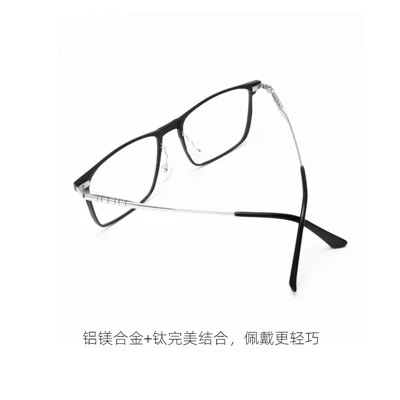
Optical glasses are essential components in a wide range of applications, from eyewear to high – precision scientific instruments. As an optical glasses supplier, I have in – depth knowledge of the materials used to make these crucial products. In this blog, I will explore the various types of materials employed in the production of optical glasses and their unique properties. Optical Glasses
Silicate Glasses
Silicate glasses are the most widely used materials for making optical glasses. They are primarily composed of silica (SiO₂), which forms the basic network structure. Silica is a very stable and abundant material. In nature, it can be found in quartz sand.
To modify the properties of silica – based glasses, other oxides are added. For example, sodium oxide (Na₂O) is added to lower the melting point of silica. This makes the glass easier to manufacture, as pure silica has an extremely high melting point of around 1710°C. However, too much sodium oxide can reduce the chemical durability of the glass.
Calcium oxide (CaO) is another common additive. It helps to improve the chemical resistance and mechanical strength of the glass. By adjusting the ratios of silica, sodium oxide, calcium oxide, and other minor components, different types of silicate optical glasses can be produced.
Soda – lime glass is a well – known type of silicate glass. It is commonly used in everyday applications such as windows and some basic optical lenses. It is relatively inexpensive to produce and has good workability. However, its optical properties are not as high – end as some other types of optical glasses.
Borosilicate glass is another important silicate – based optical glass. It contains boron oxide (B₂O₃) in addition to silica, soda, and lime. Borosilicate glass has a low coefficient of thermal expansion, which means it can withstand rapid temperature changes without cracking. This property makes it suitable for applications such as laboratory glassware and some high – performance optical lenses, especially those used in environments with variable temperatures.
Flint Glasses
Flint glasses are a type of optical glass that contains a significant amount of lead oxide (PbO). The addition of lead oxide has several effects on the glass’s properties. Firstly, it increases the refractive index of the glass. A higher refractive index allows the glass to bend light more effectively, which is crucial for applications such as lenses in cameras and telescopes.
Flint glasses also have a relatively high dispersion. Dispersion refers to the ability of a material to separate white light into its component colors. While high dispersion can be a drawback in some applications where color correction is needed, it is useful in certain optical devices, such as prisms, which are used to split light into different wavelengths.
However, the use of lead oxide in flint glasses has some environmental and health concerns. Lead is a toxic heavy metal. In recent years, there have been efforts to develop lead – free alternatives with similar optical properties. Some manufacturers use other metal oxides, such as barium oxide (BaO) and lanthanum oxide (La₂O₃), to achieve high refractive indices and dispersion without the use of lead.
Crown Glasses
Crown glasses are a group of optical glasses with relatively low refractive indices and dispersions. They are often used in combination with flint glasses in lens systems. By combining crown and flint glasses, optical designers can correct for chromatic aberration, which is the distortion of images due to the different refraction of light of different wavelengths.
Crown glasses typically have silica as the main component, along with small amounts of alkali and alkaline – earth oxides. They are known for their good optical homogeneity and low dispersion, making them suitable for applications where color accuracy is important, such as in high – quality photographic lenses and binoculars.
Crystalline Materials
In addition to traditional glass materials, some crystalline materials are also used in optical applications. Sapphire (aluminium oxide, Al₂O₃) is a well – known crystalline material for optical use. It has excellent mechanical and chemical properties, as well as high optical transparency in the visible and infrared regions.
Sapphire is very hard, which makes it resistant to scratching and abrasion. This property is particularly useful in applications where the optical component needs to be durable, such as in watch crystals and some high – end camera lenses. However, the production of sapphire optical components is more complex and expensive compared to glass – based materials.
Another crystalline material is calcium fluoride (CaF₂). It has a very low dispersion and high transparency in the ultraviolet and infrared regions. Calcium fluoride is often used in applications such as ultraviolet lasers and infrared optical systems.
Special – Purpose Optical Glasses
There are also special – purpose optical glasses designed for specific applications. For example, phosphate glasses are used in applications where high solubility of rare – earth elements is required. Rare – earth elements can be added to phosphate glasses to achieve special optical properties, such as fluorescence or lasing action.
Chalcogenide glasses are made from chalcogen elements (sulfur, selenium, and tellurium). They have excellent transparency in the mid – infrared region, making them suitable for infrared imaging and sensing applications, especially in military and aerospace industries.
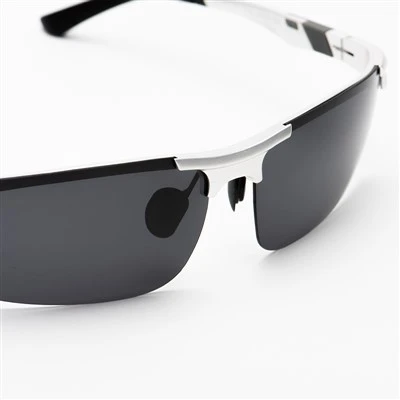
As an optical glasses supplier, I understand the importance of using the right materials for different applications. Each type of material has its own pros and cons, and our team of experts can help customers select the most suitable optical glass for their specific needs. Whether it’s for consumer eyewear, high – end scientific instruments, or industrial optical devices, we have a wide range of optical glass products made from different materials to meet various requirements.
Sports Sunglasses If you are in the market for optical glasses and are looking for a reliable supplier with in – depth knowledge of materials and advanced manufacturing capabilities, please feel free to contact us. We can provide detailed information about our products, technical specifications, and pricing. Through open communication and cooperation, we are confident that we can find the perfect optical glass solution for your business.
References
- "Handbook of Optical Glass" by I. É. Grishina, V. V. Voronov, and A. V. Antonov.
- "Optical Materials Technology" edited by M. J. Weber.
- "Glass Science and Technology" series, published by Elsevier.
Yuhuan Longsen Glasses Co., Ltd.
As one of the most professional optical glasses manufacturers and suppliers in China, we offer a wide range of products with superior quality. Please feel free to buy high quality optical glasses for sale here and get quotation from our factory. We also accept customized orders.
Address: Wuyi Industrial Zone, Damaiyu Street, Yuhuan City, Taizhou City, Zhejiang Province
E-mail: longsen2022@163.com
WebSite: https://www.longsenglasses.com/
